February Fintech Funding in Focus

Fintech funding is making a comeback after two slow years.
With interest rates falling globally and regulators providing much-needed clarity, investment is surging; January and February alone have seen a wave of funding activity. Investors are focusing heavily on regtech and AI, highlighting a dual priority: tackling compliance challenges and countering the rise of AI-driven fraud. At the same time, AI is unlocking new efficiencies in the regtech space.
In this analysis, Juniper Research examines the latest funding rounds from three standout companies - and what their success reveals about the industry's direction.
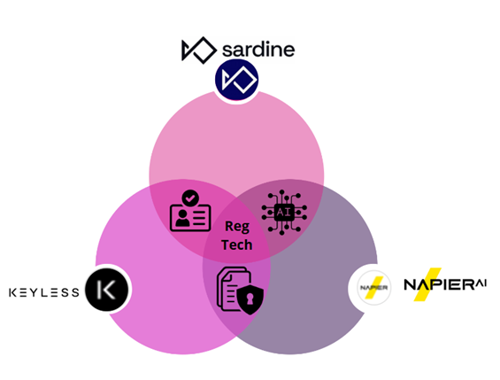 Source: Juniper Research
Keyless
Keyless, founded in 2019, is an authentication technology company that uses facial biometrics to authenticate customers in a way that preserves the privacy of its users.
In January 2025, it raised $2 million in a funding round, which brings it to a total of $10 million over 18 months. The recent funding round was aimed at countering injection attacks used in advanced deepfakes, which is a growing threat for identity verification. This significant investment displays the interest of the financial industry in funding innovation designed to reduce fraud, particularly as AI advancements become able to create increasingly realistic images. As malicious actors develop methods of using AI to bypass traditional verification methods, innovations such as liveness checks on facial recognition are vital for securing the future of payment verification.
Furthermore, this investment signals a growing demand for biometric payments as a key solution to regulatory compliance. With the implementation of PSD2’s strong customer authentication (SCA) requirements in 2016 and expectations of PSD3 regulation in 2026, cutting compliance costs while maintaining security is key.
Biometric payments are gaining traction as a secure and convenient method of fulfilling compliance with PSD2 regulations. Keyless can authenticate device possession and inherence to comply with PSD2 without centrally storing user biometric data, which reduces the bank’s data protection liabilities. As the capabilities of AI to mimic humans during verification grows, the need for these solutions will intensify, driving investment in the sector.
Sardine AI
A fast-moving fintech, having only been founded in 2020, Sardine AI has raised $145 million in funding to date. Sardine’s AI-enhanced platform uses device intelligence, behavioural biometrics, and machine learning to better prevent fraud in real-time and streamline compliance.
In February 2025, Sardine announced it had raised $70 million in Series C funding, after nearly doubling its customer base from the previous year. This round was led by US venture capital firm Activant Capital, with plans to roll-out new AI agents for risk and compliance – building on its $51.5 billion Series B funding in 2022. This capital injection will power the launch of Sardine’s AI-powered compliance agents, designed to streamline fraud and compliance operations, reduce manual workloads, and cut costs for financial institutions.
AI agents are advanced compliance tools capable of autonomous decision making and, in the context of Sardine’s fraud detection platform, they can be utilised to automate critical investigation; enabling risk teams to focus on complex cases while still ensuring accuracy and regulatory compliance. The key areas covered by Sardine’s agents include:
- Know your customer (KYC) onboarding agents for edge case resolution
- Sanction screening agents for automated audits
- Merchant risk agents for risk scoring and decisioning
- Dispute agents for formatting chargeback submissions
As identity theft and related crimes become more prevalent, we anticipate that these AI agents will become a necessity as compliance teams become increasingly reliant on these tools.
Napier AI
Napier AI was founded in 2015, with a mission to leverage AI to solve complex regulatory problems and detect money laundering. Napier’s AI Continuum platform replaces manual tasks, such as alerts and case management, with fast automation – while leveraging explainable AI insights to flag risks for non-technical business users; helping them meet regulatory requirements for explainability and auditability.
In February 2025, Napier AI announced it had received a majority growth investment from Marlin Equity Partners. This capital injection adds to Napier’s existing $55.8 million in funding and will be used to fuel its global expansion and R&D. This investment demonstrates the demand for AI-based compliance tools in today's increasingly complex regulatory environment. To remain competitive, firms must develop a robust compliance framework and, having regulatory oversight, clearly define policies and procedures – with regtech solutions becoming paramount in unlocking efficiencies in these areas.
We anticipate that AI-enabled startups will continue to drive the trajectory of fintech investments, due to their ability to scale efficiently and attract attention from investors. In 2023, LexisNexis Risk Solutions unveiled that financial crime compliance costs would skyrocket to $206.1 billion globally, citing the growing influence of AI as a revolutionary force in driving these expenses. Investment in regtech solutions reduces the burden on compliance teams, with advanced analytics enhancing their compliance processes and allowing them to better detect complex financial crime typologies – with a lack of automation being a key barrier to meeting compliance requirements. While the rising cost of compliance proves difficult for businesses to manage, it is a key signature of regtech tools becoming more sophisticated and displays the high level of innovation across this space.
In conclusion, we predict that fintech investments will continue to grow, led by investment in AI-enhanced regtech solutions. Investors are anticipating the success of these solutions due to their fast growth in client base and geographical reach. This success is being aided by the demand for regulatory tools that can better streamline compliance processes, improve efficiency, and reduce human error. The foundation for these intelligent tools leverages AI and machine learning, helping firms to better detect vulnerabilities and detect suspicious patterns – thereby helping them to combat the rising cost of compliance and better meet regulatory requirements. For all of these reasons, AI, geographic expansion, client base growth, and demand for streamlined solutions, regtech will continue to draw investors' attention, and we anticipate sustainable and profitable growth across the fintech sector as this investment flourishes over the next few years.
Daniel analyses developments in financial and payments markets, and how these interplay with emerging technologies, such as blockchain and AI. His recent reports include QR Code Payments, Future Leaders 100: Fintech, and KYC/KYB Systems.
Meanwhile, Lorien specialises in analysing and forecasting emerging trends and innovations in financial markets. Her latest reports have covered topics including Virtual Cards and Network Tokenisation.
Related Research
-
 ReportSeptember 2026Fintech & Payments
 Shane O'SullivanBanking Fraud Prevention Market, 2026-2031
Our Banking Fraud Prevention research suite provides a comprehensive and in-depth analysis of the types of fraud currently impacting the banking sector, and the evolving methods that can be used to overcome them.
VIEW -
 ReportMay 2026Identity & Security
Shane O'SullivanDigital Identity Verification Market, 2026-2030
ReportMay 2026Identity & Security
Shane O'SullivanDigital Identity Verification Market, 2026-2030Our Digital Identity Verification research suite provides detailed analysis of this rapidly changing market; allowing digital identity verification solution providers, financial institutions, and other stakeholders to gain an understanding of key trends and growth opportunities.
VIEW
Latest research, whitepapers & press releases
-
 ReportOctober 2026Fintech & Payments
 Jawad JahanCrypto-gaming Market: 2026-2035
Our Crypto-gaming Market research suite provides an insightful analysis of this rapidly growing market; enabling stakeholders - from crypto-gaming and sportsbooks operators, prediction market platforms, business-to-business (B2B) gambling platforms and software providers, to crypto payment processors and regulators - to understand future growth, key trends, and the competitive environment.
VIEW -
 ReportOctober 2026Telecoms & Connectivity
 Alex WebbRetail Roaming Market: 2026-2031
Our Retail Roaming research suite for mobile network operators (MNOs) and mobile virtual network operators (MVNOs) provides detailed analysis and strategic recommendations for the next era of retail roaming.
VIEW -
 ReportSeptember 2026Fintech & Payments
 Dr Manju ChhillarEmbedded Finance Market: 2026-2031
Embedded finance is one of the fastest-growing markets in financial services, and is about to accelerate even further. Our Embedded Finance Market research provides detailed analysis of the key drivers behind this growth, and what these mean for stakeholders in this market.
VIEW -
 ReportSeptember 2026Identity & Security
 Thomas WilsonApplication Security Market: 2026-2031
Our Application Security research suite provides detailed analysis of this emerging market; allowing application security providers to gain an understanding of key security trends and challenges, potential growth opportunities, and the competitive environment.
VIEW -
 ReportSeptember 2026Fintech & Payments
 Shane O'SullivanBanking Fraud Prevention Market: 2026-2031
Our Banking Fraud Prevention research suite provides a comprehensive and in-depth analysis of the types of fraud currently impacting the banking sector, and the evolving methods that can be used to overcome them.
VIEW -
 ReportSeptember 2026Telecoms & Connectivity
 Nick MaynardPrivate LTE & 5G Networks Market: 2026-2031
Our Private LTE & 5G Networks research suite provides detailed and insightful analysis of this evolving market; enabling stakeholders - from private LTE & 5G network platform specialists, mobile network operators, and diversified technology companies - to understand future growth, key trends, and the competitive environment.
VIEW


-
 WhitepaperOctober 2026Fintech & Payments
Jawad Jahan
WhitepaperOctober 2026Fintech & Payments
Jawad JahanCompliance or Anonymity - The Crypto-gaming Operator’s Dilemma
Our complimentary whitepaper, Compliance or Anonymity - The Crypto-gaming Operator’s Dilemma, analyses the current regulatory landscape of the crypto-gaming market.
VIEW -
 WhitepaperOctober 2026Telecoms & Connectivity
Alex Webb
WhitepaperOctober 2026Telecoms & Connectivity
Alex WebbReimagining the Future of Retail Roaming – How Mobile Network Operators Must Adapt
Our complimentary whitepaper, Reimagining the Future of Retail Roaming – How Mobile Network Operators Must Adapt, explores the emerging opportunities for MNOs within retail roaming.
VIEW -
 WhitepaperSeptember 2026Fintech & Payments
Dr Manju Chhillar
WhitepaperSeptember 2026Fintech & Payments
Dr Manju ChhillarEmerging Markets: The Next Opportunity for Embedded Finance
This free whitepaper examines how a combination of multiple factors is driving North America towards saturation for embedded finance.
VIEW -
 WhitepaperSeptember 2026Emerging Technology
Thomas Wilson
WhitepaperSeptember 2026Emerging Technology
Thomas WilsonVibe Coding: The Fastest-growing Threat to Application Security Today
Our complimentary whitepaper, Vibe Coding: The Fastest-growing Threat to Application Security Today, examines the state of the application security market; considering its impact on different verticals, and how it is being employed in these verticals to best combat malicious attackers and keep sensitive data safe.
VIEW -
 WhitepaperSeptember 2026Fintech & Payments
Shane O'Sullivan
WhitepaperSeptember 2026Fintech & Payments
Shane O'SullivanThe Fraud Frontier: Securing Banking in an AI-driven Era
Our complimentary whitepaper, The Fraud Frontier: Securing Banking in an AI-driven Era, examines the rapidly evolving state of the banking fraud prevention market.
VIEW -
 WhitepaperSeptember 2026Telecoms & Connectivity
Nick Maynard
WhitepaperSeptember 2026Telecoms & Connectivity
Nick MaynardHow Private Cellular Networks Are Unlocking Industry 4.0
Our complimentary whitepaper, How Private Cellular Networks Are Unlocking Industry 4.0, examines how private LTE & 5G networks are reshaping the way industry works.
VIEW


-
Fintech & Payments
Crypto Gaming: Wagers to Reach $1.3 Trillion by 2035, as Crypto Rails Widen Global Access Despite Regulatory Challenges
October 2026 -
Fintech & Payments
Juniper Research Unveils Identity & Security Award Winners for 2026
October 2026 -
Retail Roaming Revenue to Fall $4 Billion By 2031, as Regulatory Restrictions and Competition Bite
October 2026 -
Fintech & Payments
Soft POS to Surpass 100 Million Installations in 2030
September 2026 -
Fintech & Payments
The NextGen Payments & RegTech Forum Arrives in Dubai
September 2026 -
Fintech & Payments
The Global Trade Finance Expo Arrives in Dubai, UAE
September 2026