The Distillery: Revolut's India Roll-out, and AT&T, Verizon and T-Mobile's Satellite Collaboration


In this edition:
- Revolut begins India roll-out to 450,000 waitlisted users, but with neobank competition so fierce in this market, what can Revolut do to differentiate itself?
- U-Cell and ZTE deploy a new AI-RAN solution that improves energy efficiency and could point the way to a sustainable green future in telecoms.
- AT&T, Verizon and T-Mobile collaborate on satellite-enabled coverage which could signal an end to coverage being a point of differentiation for MNOs.
- Our latest free reports exploring the cost of payments and systems fragmentation with Payabl., and the global state of the cross-border payments market with Thunes.
FINTECH & PAYMENTS
Revolut Begins India Roll-out to 450,000 Waitlisted Users

Revolut has begun to roll out services in India; granting access to the 450,000 users who signed up to their app earlier this year. These users are now being onboarded into the company's beta programme; gaining access to a localised version of the Revolut app.
Through the beta offering, enrolled users can use UPI payments, digital wallets, multi-currency cards and virtual cards. This expansion has been in the works since 2021; fuelled by an acquisition of Arvog Forex in 2022 to secure local remittance and multi-currency accounts to Indian customers. Over the last year, Revolut received a prepaid payment instrument licence from the Reserve Bank of India, which allows it to integrate with the widely used UPI network, and issue local prepaid cards. These developments have positioned Revolut well for its eventual Indian launch; ensuring that all services are in place before the roll-out began.
Distilled…
🟣 Heavy Neobank Competitive Environment: India presents as a significant growth opportunity, which many companies are working to realise. As a European-based digital-only bank, Revolut may struggle when competing with multiple other local digital payments fintechs. PhonePe and Paytm and both popular apps that provide money transfer capabilities, savings, and insurance. These each have 700 million and 300 million Indian users respectively. Revolut may find it difficult to break into a market where its basic capabilities are already provided by competitors who are entrenched in the local market.
🟣 Cross-border Remittance Payments Forms Revolut’s Competitive Edge: Revolut has extensive experience in the cross-border payments market, and rose to prominence in Europe with its initial offering of fee-free FX services for international card payments, as well as its simple user interface for sending digital remittance payments. As India is one of the largest recipients of remittances, Revolut’s global capabilities may be able to carve a niche within those engaging in cross-border payments.
MORE FINTECH INSIGHTS
💸 Sophisticated Microfinance Services Spend to Surpass $22 Billion By 2030 [Research]
📱 Monzo Takes Another Step Towards Super-app Status with the Launch of Its Mobile Plan [Blog]
🏦 Pay by Bank Pursues the American Dream [Blog]
FINTECH & PAYMENTS
Free Report: Solving Financial Fragmentation for Modern Businesses
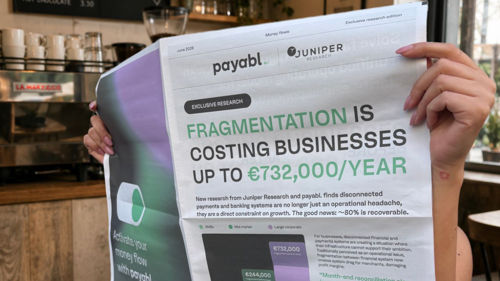
For most businesses, fragmented payments and systems are no longer just an operational issue. They’re a direct constraint on growth.
This free whitepaper, produced in collaboration with Payabl., shows that around 80% of the impact is recoverable, but only when fragmentation starts being treated as a strategic priority.
Download the full report for more insights
TELECOMS & CONNECTIVITY
Ucell and ZTE’s AI-RAN Solution Improves Data Energy Efficiency by 10%
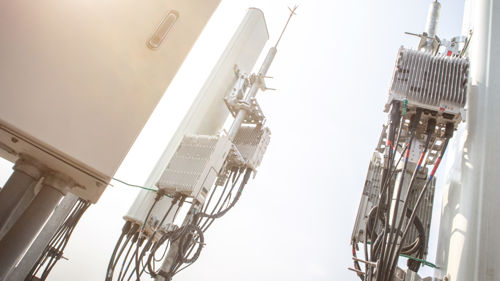
On 26th May 2026, ZTE and Ucell announced they had completed deployment of an AI-powered energy-saving solution in Uzbekistan. The solution has improved network energy efficiency ratio (data traffic delivered per kilowatt‑hour); meaning 10.6% more data can be delivered for every unit of electricity consumed.
The green energy solution covers the entirety of Ucell’s commercial RAN network; deploying dual‑layer AI architecture to dynamically optimise energy use from real‑time traffic, to lower both carbon emissions and operational costs. The solution also automatically exits the energy‑saving mode if data delivery KPIs fall below set thresholds, to ensure a good user experience and network reliability.
Distilled…
🟣 ZTE and Ucell have stressed that the solution is designed to ensure no impact to network user experience by conducting real‑time monitoring before, during, and after energy‑saving actions. The solution monitors preset KPIs for data speed and throughput, and will automatically exit energy‑saving mode if the network becomes too slow.
🟣 The partners say the successful implementation sets a benchmark for green network operations in the region; showcasing how intelligent AI automation can drive both ecological and economic benefits in modern telecoms. Andrey Shishkovsky, CEO of Ucell, added: "[This is a] decisive step toward reducing our carbon footprint and improving operational efficiency. The results prove that smart networks are not just the future – they are already delivering tangible benefits to our business and the planet today."
🟣 Green initiatives are proving a key differentiator for telcos, as consumers increasingly demand sustainable connectivity and the sector pushes towards achieving net zero. According to data from GSMA Intelligence, renewables accounted for approximately 30% of total telco energy consumption in 2024, up 10 percentage points on 2023, while grid power continues to provide most of the sector's energy, with about 75% consumed by mobile RAN networks.
MORE TELECOMMUNICATIONS INSIGHTS
🛰️ Direct to Cell: Monthly Active Users to Reach Over 130 Million by 2031 [Research]
🌍Juniper Research Predicts the US and South Korea Will Lead 6G Launches in 2029 [Research]
📲 Learning from 5G - How MNOs Can Make 6G a Success [Whitepaper]
📈 AI Will Monetise 5G By Making It Cheaper [Blog]

FINTECH & PAYMENTS
Free Report: The Thunes Cross-border Payments Interoperability Index 2026
Where does cross-border payment friction actually sit? And which countries are addressing it best?
Thunes and Juniper Research have published the first Cross-Border Payments Interoperability Index, ranking 50 countries across digital infrastructure, financial inclusion, cross-border connectivity and market readiness, to answer such questions.
This global report reveals a widening gap between seamless domestic payments and fragmented global rails, where dissatisfied users are accelerating new trends as they seek cross-border solutions that actually meet their needs.
Download now for more insights:
TELECOMS & CONNECTIVITY
The End of the Dead Zone? Why Mobile Operators Are Embracing Satellite Connectivity

What happens when the three largest mobile operators in the US decide that competing on network coverage no longer makes sense? The recent decision by Verizon, AT&T, and T-Mobile to collaborate on satellite-enabled coverage signals a significant shift in telecom strategy. For decades, network reach was one of the industry’s most important competitive battlegrounds. Today, however, the emergence of direct-to-device satellite connectivity is encouraging operators to view ubiquitous coverage as a shared infrastructure challenge, rather than a point of differentiation.
For the wider telecom ecosystem, this development reflects the growing integration of satellite and terrestrial networks. As coverage gaps become easier to address, connectivity is likely to become more consistent across remote, rural, and hard-to-reach environments. This has implications for a range of sectors, including transportation, energy, agriculture, aviation, and maritime, where reliable connectivity has traditionally been difficult to achieve. It also highlights the increasing importance of collaboration between mobile operators, satellite providers, device manufacturers, and other technology partners as the market adapts to a more interconnected network landscape.
Distilled…
🟣 Satellite-terrestrial convergence is creating new revenue opportunities. Operators and technology providers can leverage integrated networks to deliver new enterprise, IoT, and industry-specific services.
🟣 Partnerships will be critical to success. Collaboration between mobile operators, satellite providers, device manufacturers, and ecosystem players will be essential to bringing scalable solutions to market.
🟣 Competitive differentiation is shifting up the value chain. As coverage becomes more ubiquitous, success will increasingly depend on service innovation, enterprise solutions, and customer experience, rather than network reach alone.
THE LAST DROP
🎤 TNS on the Evolving Challenges and Opportunities Shaping Enterprise Communications in 2026 [Interview]
🎤 Sinch on the Trends and Challenges in the RCS for Business Market [Interview]
🚀 SpaceX’s IPO Setting the Standard for Terrestrial Telcos [Blog]
💱 Cross-border Payment Transactions to Hit $63 Trillion by 2030 Globally [Research]
Related Research
-
 ReportFebruary 2025Open Banking APIs
 Matthew PurnellOpen Banking APIs Market, 2025-2029
Our Global Open Banking APIs research suite provides detailed and perceptive analysis of this evolving market; enabling stakeholders such as Open Banking infrastructure and payment service providers, banks and other financial institutions, and eCommerce platforms and merchants to understand future growth, key trends, and the competitive environment.
VIEW -
 ReportJune 2026Telecoms & Connectivity
 Alex WebbDirect to Cell Market, 2026-2031
Our newest Direct-to-Cell research provides market stakeholders, such as mobile network operators and satellite network operators, with key analysis of the future of this rapidly emerging market.
VIEW -
 ReportOctober 2025Telecoms & Connectivity
Alex WebbDirect to Satellite Market, 2025-2030
ReportOctober 2025Telecoms & Connectivity
Alex WebbDirect to Satellite Market, 2025-2030Juniper Research’s Direct to Satellite research suite provides satellite providers, investors, and partners, such as Mobile Network Operators, with an extensive analysis and insights into the direct to satellite market.
VIEW
Latest research, whitepapers & press releases
-
 ReportOctober 2026Fintech & Payments
 Michael GreenwoodAccounts Payable Automation Market: 2026-2031
Our Accounts Payable (AP) Automation research suite provides an insightful analysis of this rapidly growing market; enabling stakeholders to understand future growth, key trends and the competitive environment.
VIEW -
 ReportOctober 2026Fintech & Payments
 Jawad JahanCrypto-gaming Market: 2026-2035
Our Crypto-gaming Market research suite provides an insightful analysis of this rapidly growing market; enabling stakeholders - from crypto-gaming and sportsbooks operators, prediction market platforms, business-to-business (B2B) gambling platforms and software providers, to crypto payment processors and regulators - to understand future growth, key trends, and the competitive environment.
VIEW -
 ReportOctober 2026Telecoms & Connectivity
 Alex WebbRetail Roaming Market: 2026-2031
Our Retail Roaming research suite for mobile network operators (MNOs) and mobile virtual network operators (MVNOs) provides detailed analysis and strategic recommendations for the next era of retail roaming.
VIEW -
 ReportSeptember 2026Fintech & Payments
 Dr Manju ChhillarEmbedded Finance Market: 2026-2031
Embedded finance is one of the fastest-growing markets in financial services, and is about to accelerate even further. Our Embedded Finance Market research provides detailed analysis of the key drivers behind this growth, and what these mean for stakeholders in this market.
VIEW -
 ReportSeptember 2026Identity & Security
 Thomas WilsonApplication Security Market: 2026-2031
Our Application Security research suite provides detailed analysis of this emerging market; allowing application security providers to gain an understanding of key security trends and challenges, potential growth opportunities, and the competitive environment.
VIEW -
 ReportSeptember 2026Fintech & Payments
 Shane O'SullivanBanking Fraud Prevention Market: 2026-2031
Our Banking Fraud Prevention research suite provides a comprehensive and in-depth analysis of the types of fraud currently impacting the banking sector, and the evolving methods that can be used to overcome them.
VIEW


-
 WhitepaperOctober 2026Fintech & Payments
Michael Greenwood
WhitepaperOctober 2026Fintech & Payments
Michael GreenwoodAccounts Payable Automation ~ How Businesses Are Reducing Operational Costs
Our complimentary whitepaper, Accounts Payable Automation ~ How Businesses Are Reducing Operational Costs, analyses how AP automation is combatting costs by decreasing the need for manual processes, and provides strategic insight into a number of key trends in the AP automation space.
VIEW -
 WhitepaperOctober 2026Fintech & Payments
Jawad Jahan
WhitepaperOctober 2026Fintech & Payments
Jawad JahanCompliance or Anonymity - The Crypto-gaming Operator’s Dilemma
Our complimentary whitepaper, Compliance or Anonymity - The Crypto-gaming Operator’s Dilemma, analyses the current regulatory landscape of the crypto-gaming market.
VIEW -
 WhitepaperOctober 2026Telecoms & Connectivity
Alex Webb
WhitepaperOctober 2026Telecoms & Connectivity
Alex WebbReimagining the Future of Retail Roaming – How Mobile Network Operators Must Adapt
Our complimentary whitepaper, Reimagining the Future of Retail Roaming – How Mobile Network Operators Must Adapt, explores the emerging opportunities for MNOs within retail roaming.
VIEW -
 WhitepaperSeptember 2026Fintech & Payments
Dr Manju Chhillar
WhitepaperSeptember 2026Fintech & Payments
Dr Manju ChhillarEmerging Markets: The Next Opportunity for Embedded Finance
This free whitepaper examines how a combination of multiple factors is driving North America towards saturation for embedded finance.
VIEW -
 WhitepaperSeptember 2026Emerging Technology
Thomas Wilson
WhitepaperSeptember 2026Emerging Technology
Thomas WilsonVibe Coding: The Fastest-growing Threat to Application Security Today
Our complimentary whitepaper, Vibe Coding: The Fastest-growing Threat to Application Security Today, examines the state of the application security market; considering its impact on different verticals, and how it is being employed in these verticals to best combat malicious attackers and keep sensitive data safe.
VIEW -
 WhitepaperSeptember 2026Fintech & Payments
Shane O'Sullivan
WhitepaperSeptember 2026Fintech & Payments
Shane O'SullivanThe Fraud Frontier: Securing Banking in an AI-driven Era
Our complimentary whitepaper, The Fraud Frontier: Securing Banking in an AI-driven Era, examines the rapidly evolving state of the banking fraud prevention market.
VIEW


-
Fintech & Payments
Accounts Payable Automation to Save Global Businesses 6.2 Billion Hours by 2031, Accelerated by Business System Integration
October 2026 -
Fintech & Payments
The 25th NextGen Payments & RegTech Forum Arrives in Athens, Greece
October 2026 -
Fintech & Payments
Crypto Gaming: Wagers to Reach $1.3 Trillion by 2035, as Crypto Rails Widen Global Access Despite Regulatory Challenges
October 2026 -
Fintech & Payments
Juniper Research Unveils Identity & Security Award Winners for 2026
October 2026 -
Retail Roaming Revenue to Fall $4 Billion By 2031, as Regulatory Restrictions and Competition Bite
October 2026 -
Fintech & Payments
Soft POS to Surpass 100 Million Installations in 2030
September 2026