Can We Have Our Speedy Payments and Keep Them Safe Too?

Fraud prevention has been in the spotlight for the past few weeks, with the ‘Chase Bank Glitch’ dominating headlines. (Spoiler alert: it was fraud). Is this case an outlier, or an example of an inevitable increase in fraud in an era which demands faster and faster payments?
The Chase Bank Glitch: What We Learned
The ‘Chase Bank Glitch’ can best be described as a resurgence in traditional cheque fraud, resulting from social media users, on platforms such as TikTok, publicising how people could earn free money by writing a cheque to themselves and depositing it in their Chase bank account, and then immediately withdrawing it in cash.
It's uncertain whether people could withdraw money faster than normal due to a technical glitch, or if they were withdrawing the ‘float’ that banks typically make available while verification occurs. But, either way, this incident shows displays the speed at which scammers will take advantage of any perceived vulnerability in a bank’s fraud prevention system. While the number of individuals involved in this fraud remains unclear, this incident underscores the need for more widespread digital financial literacy initiatives.
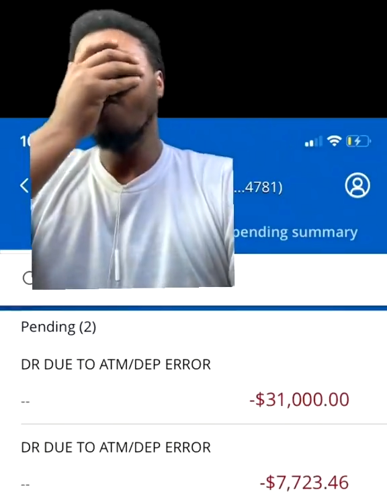
Source: NYPost
Looking to the future, it’s easy to assume that the new digital-first generations will be more resistant to scams. In fact, with research finding that 57% of Gen Z and 60% of millennials primarily use mobile banking, it’s easy to think of digital scams as something that only happens to the old and digitally illiterate. However, survey data from Deloitte suggests that Gen Z are three times as likely to fall for an online scam as baby boomers.
This could be for a variety of reasons: spending more money online than baby boomers do, a preference for convenience over security, or having a higher online presence that can be hacked and used to personalise scams. However, it is clear that fraud will not be phased out with the older generations, and active intervention is needed as incidences of fraud continue to increase.
Regulating Authorised Push Payments Fraud
Authorised push payments fraud involves financial scams where fraudsters use social engineering to manipulate victims into authorising real-time payments, which are difficult to reverse. UK Finance estimates this to be the most common type of financial fraud in the nation, costing the economy £459.7 million in 2023.
The UK PSR (Payments System Regulator) is launching new rules in response to this. These were initially planned to cover APP fraud to the value of £415,000, but has since been reduced to £85,000; which shifts more liability to the consumer for higher value scams. Furthermore, the legislation also allows banks to delay processing of potentially fraudulent transactions by a further 72 hours.
However, this comes in the wake of the FCA (Financial Conduct Authority) noting that some payments institutions delay payments and freeze accounts for too long, with insufficient reasoning. This highlights the challenge banks face in balancing fraud detection; false positives can disrupt customers’ cashflow, while false negatives will financially cost the bank.
These regulations, which are due to be implemented in October this year, are expected to create a motive for banks to improve their fraud detection software, possibly partnering with fintechs to do so. Machine learning-powered real-time monitoring, using forensic analysis and pattern recognition, could enable secure, instant payments by quickly identifying suspicious activity during transactions. Furthermore, this technology allows dynamic updates to fraud detection rules, adapting to emerging patterns of fraud as they arise.
However, banks may be hesitant to implement these solutions, due to potential ethical concerns. Machine learning models are known to reproduce or even amplify existing bias against groups if they are trained on biased data sets, which could lead to some demographics being under or over-flagged as fraudulent when making transactions. In order to prevent this, it is necessary to employ bias auditing and fairness-enhancing strategies when the models are being trained.
The Future of Fraud: Cryptocurrency Scams
Cryptocurrencies are a form of electronic money recorded on decentralised blockchains; offering fast, low-cost, and global payments. However, they also offer reduced protection. This speed, lack of intermediaries, and anonymity attract scammers; in 2023, Americans lost $5.6 billion dollars to cryptocurrency-related fraud.
Though crypto scam complaints make up 10% of all financial fraud reports, they represent almost 50% of total losses. Blockchain transactions are irreversible, meaning that if users are socially manipulated to authorise a cryptocurrency-based payment, it is very unlikely they will get their money back. Consumers would also not be reimbursed for these scams under current regulations, such as the previously discussed PSR regime, as they operate outside traditional financial systems.
In conclusion, real-time payments can be both fast and secure, if accompanied by real-time fraud detection. Regulations holding banks accountable for fraud could drive innovation in this area. However, the decentralised nature of the cryptocurrency industry limits regulatory impact, leaving digital financial literacy and the creation of more appealing digital payment alternatives as the best crypto fraud prevention strategies.
Lorien is a Research Analyst in the Fintech and Payments team at Juniper Research, and specialises in analysing and forecasting emerging trends and innovations in financial markets. Her latest reports have covered topics including eCommerce Payments and Modern Card Issuing Platforms.
Related Research
-
 ReportSeptember 2026Fintech & Payments
 Shane O'SullivanBanking Fraud Prevention Market, 2026-2031
Our Banking Fraud Prevention research suite provides a comprehensive and in-depth analysis of the types of fraud currently impacting the banking sector, and the evolving methods that can be used to overcome them.
VIEW
Latest research, whitepapers & press releases
-
 ReportOctober 2026Fintech & Payments
 Michael GreenwoodAccounts Payable Automation Market: 2026-2031
Our Accounts Payable (AP) Automation research suite provides an insightful analysis of this rapidly growing market; enabling stakeholders to understand future growth, key trends and the competitive environment.
VIEW -
 ReportOctober 2026Fintech & Payments
 Jawad JahanCrypto-gaming Market: 2026-2035
Our Crypto-gaming Market research suite provides an insightful analysis of this rapidly growing market; enabling stakeholders - from crypto-gaming and sportsbooks operators, prediction market platforms, business-to-business (B2B) gambling platforms and software providers, to crypto payment processors and regulators - to understand future growth, key trends, and the competitive environment.
VIEW -
 ReportOctober 2026Telecoms & Connectivity
 Alex WebbRetail Roaming Market: 2026-2031
Our Retail Roaming research suite for mobile network operators (MNOs) and mobile virtual network operators (MVNOs) provides detailed analysis and strategic recommendations for the next era of retail roaming.
VIEW -
 ReportSeptember 2026Fintech & Payments
 Dr Manju ChhillarEmbedded Finance Market: 2026-2031
Embedded finance is one of the fastest-growing markets in financial services, and is about to accelerate even further. Our Embedded Finance Market research provides detailed analysis of the key drivers behind this growth, and what these mean for stakeholders in this market.
VIEW -
 ReportSeptember 2026Identity & Security
 Thomas WilsonApplication Security Market: 2026-2031
Our Application Security research suite provides detailed analysis of this emerging market; allowing application security providers to gain an understanding of key security trends and challenges, potential growth opportunities, and the competitive environment.
VIEW -
 ReportSeptember 2026Fintech & Payments
 Shane O'SullivanBanking Fraud Prevention Market: 2026-2031
Our Banking Fraud Prevention research suite provides a comprehensive and in-depth analysis of the types of fraud currently impacting the banking sector, and the evolving methods that can be used to overcome them.
VIEW


-
 WhitepaperOctober 2026Fintech & Payments
Michael Greenwood
WhitepaperOctober 2026Fintech & Payments
Michael GreenwoodAccounts Payable Automation ~ How Businesses Are Reducing Operational Costs
Our complimentary whitepaper, Accounts Payable Automation ~ How Businesses Are Reducing Operational Costs, analyses how AP automation is combatting costs by decreasing the need for manual processes, and provides strategic insight into a number of key trends in the AP automation space.
VIEW -
 WhitepaperOctober 2026Fintech & Payments
Jawad Jahan
WhitepaperOctober 2026Fintech & Payments
Jawad JahanCompliance or Anonymity - The Crypto-gaming Operator’s Dilemma
Our complimentary whitepaper, Compliance or Anonymity - The Crypto-gaming Operator’s Dilemma, analyses the current regulatory landscape of the crypto-gaming market.
VIEW -
 WhitepaperOctober 2026Telecoms & Connectivity
Alex Webb
WhitepaperOctober 2026Telecoms & Connectivity
Alex WebbReimagining the Future of Retail Roaming – How Mobile Network Operators Must Adapt
Our complimentary whitepaper, Reimagining the Future of Retail Roaming – How Mobile Network Operators Must Adapt, explores the emerging opportunities for MNOs within retail roaming.
VIEW -
 WhitepaperSeptember 2026Fintech & Payments
Dr Manju Chhillar
WhitepaperSeptember 2026Fintech & Payments
Dr Manju ChhillarEmerging Markets: The Next Opportunity for Embedded Finance
This free whitepaper examines how a combination of multiple factors is driving North America towards saturation for embedded finance.
VIEW -
 WhitepaperSeptember 2026Emerging Technology
Thomas Wilson
WhitepaperSeptember 2026Emerging Technology
Thomas WilsonVibe Coding: The Fastest-growing Threat to Application Security Today
Our complimentary whitepaper, Vibe Coding: The Fastest-growing Threat to Application Security Today, examines the state of the application security market; considering its impact on different verticals, and how it is being employed in these verticals to best combat malicious attackers and keep sensitive data safe.
VIEW -
 WhitepaperSeptember 2026Fintech & Payments
Shane O'Sullivan
WhitepaperSeptember 2026Fintech & Payments
Shane O'SullivanThe Fraud Frontier: Securing Banking in an AI-driven Era
Our complimentary whitepaper, The Fraud Frontier: Securing Banking in an AI-driven Era, examines the rapidly evolving state of the banking fraud prevention market.
VIEW


-
Fintech & Payments
Accounts Payable Automation to Save Global Businesses 6.2 Billion Hours by 2031, Accelerated by Business System Integration
October 2026 -
Fintech & Payments
The 25th NextGen Payments & RegTech Forum Arrives in Athens, Greece
October 2026 -
Fintech & Payments
Crypto Gaming: Wagers to Reach $1.3 Trillion by 2035, as Crypto Rails Widen Global Access Despite Regulatory Challenges
October 2026 -
Fintech & Payments
Juniper Research Unveils Identity & Security Award Winners for 2026
October 2026 -
Retail Roaming Revenue to Fall $4 Billion By 2031, as Regulatory Restrictions and Competition Bite
October 2026 -
Fintech & Payments
Soft POS to Surpass 100 Million Installations in 2030
September 2026