The Distillery: New European Satellite Plans, and Visa to Acquire BioCatch


In this edition:
- European Commission announces final phase in satellite agreement - The flagship secure satellite constellation programme is called IRIS²
- Visa acquires BioCatch - They have signed a definitive agreement to acquire the banking fraud defence specialist
- Revolut secures full banking licence in France - The licence was received from European Central Bank (ECB) after a joint review with the Autorité de contrôle prudentiel et de résolution (ACPR)
- Telna partners with MTN’s Bayobab - This alliance will combine Telna’s Connect platform with Bayobab’s IP eXchange (IPX)
TELECOMS & CONNECTIVITY
Europe Outlines Satellite Roadmap to Challenge Dominance of Starlink

On 7th August 2026, the European Commission announced the latest phase in its satellite agreement known as IRIS², which will see the regulator working with the SpaceRISE consortium to launch a secure connectivity constellation. The consortium, led by European satellite operators Eutelsat, Hispasat, and SES, hopes to reduce the region’s reliance on US satellite giants such as Starlink and Amazon Leo.
The expanded constellation will have a total of 348 satellites; 18 of which will be in medium Earth orbit (MEO) supplied by SES, and 330 as low Earth orbit (LEO) craft from Eutelsat. IRIS² was initially planned for launch in 2030, but the EU says "concrete steps" are now in place to progressively roll out connectivity services from 2029 onwards.
The constellation will provide improved defence, security, and safety services. It is estimated that these additional satellites will increase capacity for secure government services by 60% within the EU, and 54% outside of the region.
Distilled…
🟣 A secure constellation for Europe in uncertain times - By setting up its own satellite network, the EU intends to become less dependent on foreign parties for satellite Internet and communications, such as Starlink and Amazon Leo.
🟣 Military forces fighting in Ukraine are currently largely dependent on Starlink, and owner Elon Musk has recently refused to allow his network to be used for drone strikes deep into Russia. As US President Donald Trump continues to push for a peace deal in the region, there are some concerns that satellite access could be further restricted to force an agreement.
🟣 Eutelsat has hailed the potential for building 5G Non-terrestrial Networks (NTNs), with CEO Jean-François Fallacher stating, “Going to normalised technologies such as 5G NTN will also help bring the cost down, and having antennas which will be cheaper and of a smaller size.”
MORE IDENTITY INSIGHTS
🔉 Agentic and Conversational AI: Streamlining Revenue Opportunities [Whitepaper]
📡 Juniper Research Identifies Syniverse, BICS, and iBASIS as Leaders in the IPX Market [Research]
🛰️ From Earth to Orbit: Why Satellites and Mobile Networks Are Joining Forces [Blog]
FINTECH & PAYMENTS
Visa to Acquire BioCatch, a Banking Fraud Defence Specialist, for $2.4 Billion
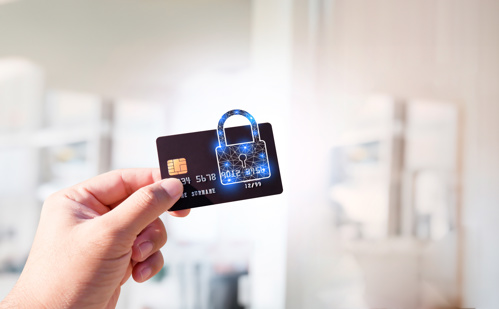
On 3rd August 2026, Visa announced that it had signed a definitive agreement of acquisition for BioCatch, an Israeli-based fraud intelligence company, for $2.4 billion in cash. The company is expected to be implemented into Visa’s current suite of in-house cyber, fraud, and security solutions, which help its clients prevent application fraud, scams, and money laundering.
BioCatch analyses behavioural, device, and network signals to prevent fraud across account opening, account takeovers, and scams. For example, to prevent investment and romance scams, it analyses cognitive behavioural signals of scam activity, such as hesitation with mouse activity, and confusion, indicated by inactive periods, which have been identified using machine-learning techniques. To protect from account takeovers, the solution continuously monitors sessions beyond the point of login to identify whether remote access is taking place. It also builds a comprehensive behavioural profile for each user, which it can compare against a new session to spot for anomalies. Using these techniques, BioCatch claims to have analysed $17.2 trillion in transactions in 2025, and prevented $4 billion in fraudulent transactions.
Distilled…
🟣 Response to Fraud Prevention Regulations: Fraud regulations across the world are tightening; forcing banks to adopt increasingly expensive solutions to detect and prevent fraud. For example, the UK introduced mandatory reimbursement for Authorised Push Prevention (APP) scams. Visa appears to be banking on the fact that demand for sensitive behavioural fraud detection solutions will increase as a result.
🟣 Driven by Increase in Real-time P2P Transfers: As use of real-time payments increases globally, the need for real-time fraud prevention is mounting in lockstep. It is no longer enough to be able to analyse user behaviour in hindsight, and reverse it before the end of the day as the transaction is pending. Instead, banks must intervene in the narrow window when the customer is logged in and attempting to make the payment.
🟣 Usage of AI Makes Scams Sophisticated and Harder to Detect: To enable them to open more accounts, scammers are utilising phone spoofing techniques to impersonate the customer’s bank during spam calls, AI to generate convincing synthetic identities during account opening, and video software to overlay different faces onto money mules. To face these threats, spend by financial institutions on fraud detection and prevention solutions - estimated to be $23.8 billion currently - is forecast to rise to $39.1 billion in 2030, as banks continue to fight more sophisticated methods of fraud.
FINTECH & PAYMENTS
Revolut Secures Full Banking Licence in France
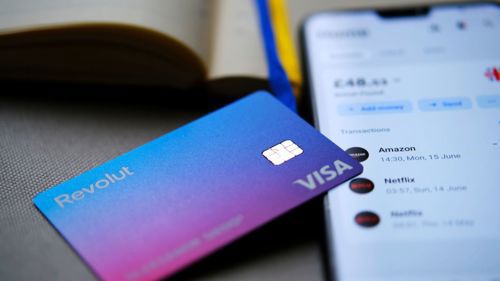
On the 10th of August, Revolut announced that it had obtained a full banking licence in France. The licence, received from the European Central Bank (ECB) following a joint review with the Autorité de contrôle prudentiel et de résolution (ACPR), allows Revolut to operate as a bank in France. The French entity will operate Revolut Bank UAB; its already existing Lithuanian entity.
Revolut identifies West Europe as its fastest-growing market. It has invested €1 billion in the region over the last year, is hiring 600 employees, and has confirmed a 2027 opening of a Western European headquarters in Paris.
Distilled…
🟣 The Type of Licence Is Significant: The offering of a full banking licence allows Revolut to offer lending, and other banking services, not permitted on the less stringent Electronic Money Institution (EMI) licence or Payment Institute (PI) licence. This is important for Revolut, as its greatest success has been in competing with established banks in its home market by offering innovative banking solutions.
🟣 Contrasts with Neobanks in the US: The success of Revolut’s application in France contrasts to the attempts by neobanks to acquire full banking licences in the US. Fellow UK-headquartered neobank Monzo announced that it was pulling the plug on its US operations in March 2026; having never secured a full banking licence. Revolut has submitted its application for a full US banking licence, however the regulatory environment has not been welcoming to international competition.
🟣 How Revolut Can Capitalise: The French banking licence allows Revolut to make a concerted effort for market share within the Western European banking market. A key benefit of the licence is the ECB oversight - building on the licence in Lithuania; allowing Revolut to offer services across ECB-regulated markets. Revolut must utilise this regulatory alignment within the EU to grow across markets in the region; using its established model of offering consumers easier access to stocks and other investment options.
MORE FINTECH INSIGHTS
Fingerprint: The Technology Behind One-click Checkouts [Blog]
📱 Contact-free Payments Become the Default as Contactless Transactions Exceed $32 Trillion Globally by 2031 [Research]
🪪 From Transaction to Transformation: The Future of POS [Whitepaper]
TELECOMS & CONNECTIVITY
Telna and Bayobab Bring Travel eSIM to Africa
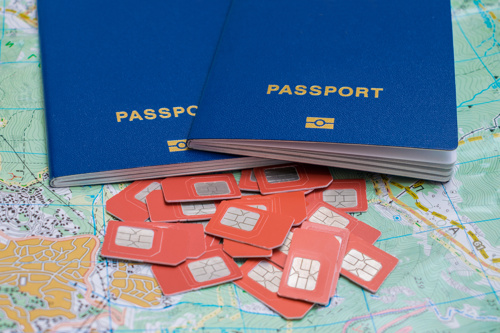
On August 7th 2026, Telna and MTN’s Bayobab partnered to combine Telna’s Connect platform with Bayobab’s IP eXchange (IPX) capabilities. The partnership is focused on accelerating travel eSIM growth in Africa, with Telna’s Connect platform delivering the digital enablement layer, and Bayobab supporting connectivity via its IPX.
This partnership will allow Bayobab to extend its wholesale roaming business into the eSIM market; enabling mobile network operators (MNOs) and others to access managed travel eSIM offerings with a branded app webstore, marketing, and customer support.
Distilled…
🟣 Travel eSIMs Are Underused in Africa: Compared to markets such as North America and Rest of Asia Pacific, Africa lags on travel eSIM adoption, despite growing demand for international connectivity. Juniper Research anticipates that Bayobab and Telna’s new partnership will enable MNOs and others to expand travel eSIM access in the region.
🟣 Travel eSIMs Are Rapidly Growing: Juniper Research projects the global travel eSIM market to exceed $8.7 billion in 2030, with international travellers rapidly adopting travel eSIMs. Key to this growth will be the launch of branded travel eSIMs by MNOs and Mobile Virtual Network Providers (MVNOs), with existing connectivity providers able to accelerate growth by leveraging their existing customer relationships and customer trust to convert previously silent roamers.
🟣 Travel eSIM Growth Will Challenge MNOs’ Existing Strategies: International travellers often purchase travel eSIMs days - if not weeks - before actually arriving in a new country. This behavioural shift means that, increasingly, MNOs cannot simply wait for mobile subscribers to arrive in a new country to secure mobile roaming revenue. They need prepaid roaming packages and analytics that can capture travel intent. Likewise, there is a growing need for MNOs to invest in travel eSIM detection capabilities that can identify travel eSIM traffic and retrieve relevant commercial information.
THE LAST DROP
🛰️ Beyond LEO: Why VLEO is Becoming the Next Growth Market [Whitepaper]
🤖 Paying at Agentic Speed: Inside Visa, Mastercard, and Stripe’s Agentic Commerce Push [Blog]
📡 VLEO Satellites: Global Investment to Near $10 Billion by 2031; Driven by Falling Launch Costs [Research]
Related Research
-
 ReportAugust 2026QR Code Payments
 Nick MaynardQR Code Payments Market, 2026-2031
This research provides exhaustive coverage of the QR Code Payments market, including the adoption rates of QR code payment systems across retail, person-to-person (P2P), and ticketing use cases.
VIEW -
 ReportAugust 2026Digital Ticketing
Nick MaynardDigital Ticketing Market Data, 2026-2031
ReportAugust 2026Digital Ticketing
Nick MaynardDigital Ticketing Market Data, 2026-2031Our Digital Ticketing report provides exhaustive coverage of the digital ticketing market, including the adoption rates of digital ticketing across different ticketing segments, as well as the use of wearable payments and chatbots.
VIEW -
 ReportAugust 2026Contactless Payments
Nick MaynardContactless Payments Market Data, 2026-2031
ReportAugust 2026Contactless Payments
Nick MaynardContactless Payments Market Data, 2026-2031Our Contactless Payments market analysis provides exhaustive data coverage of the market in its entirety, including the adoption of mobile wallets featuring contactless payment technology, the growth of contactless transactions, and the market’s associated values.
VIEW
Latest research, whitepapers & press releases
-
 ReportSeptember 2026Fintech & Payments
 Dr Manju ChhillarEmbedded Finance Market: 2026-2031
Embedded finance is one of the fastest-growing markets in financial services, and is about to accelerate even further. Our Embedded Finance Market research provides detailed analysis of the key drivers behind this growth, and what these mean for stakeholders in this market.
VIEW -
 ReportSeptember 2026IoT & Emerging Technology
 Thomas WilsonApplication Security Market: 2026-2031
Our Application Security research suite provides detailed analysis of this emerging market; allowing application security providers to gain an understanding of key security trends and challenges, potential growth opportunities, and the competitive environment.
VIEW -
 ReportSeptember 2026Fintech & Payments
 Shane O'SullivanBanking Fraud Prevention Market: 2026-2031
Our Banking Fraud Prevention research suite provides a comprehensive and in-depth analysis of the types of fraud currently impacting the banking sector, and the evolving methods that can be used to overcome them.
VIEW -
 ReportSeptember 2026Telecoms & Connectivity
 Nick MaynardPrivate LTE & 5G Networks Market: 2026-2031
Our Private LTE & 5G Networks research suite provides detailed and insightful analysis of this evolving market; enabling stakeholders - from private LTE & 5G network platform specialists, mobile network operators, and diversified technology companies - to understand future growth, key trends, and the competitive environment.
VIEW -
 ReportSeptember 2026Fintech & Payments
 Michael GreenwoodOmnichannel Payment Platform Market: 2026-2031
Our Omnichannel Payment Platform research provides detailed analysis of this rapidly emerging market; allowing omnichannel payment platform providers to gain an understanding of key payment trends and challenges, potential growth opportunities, and the competitive environment.
VIEW -
 ReportSeptember 2026IoT & Emerging Technology
Nick MaynardIdentity & Access Management Market: 2026-2031
ReportSeptember 2026IoT & Emerging Technology
Nick MaynardIdentity & Access Management Market: 2026-2031Our Identity & Access Management research suite provides detailed and insightful analysis of this evolving market; enabling stakeholders - from Identity & Access Management platform specialists, cybersecurity vendors, and diversified technology companies - to understand future growth, key trends, and the competitive environment.
VIEW


-
 WhitepaperSeptember 2026Fintech & Payments
Dr Manju Chhillar
WhitepaperSeptember 2026Fintech & Payments
Dr Manju ChhillarEmerging Markets: The Next Opportunity for Embedded Finance
This free whitepaper examines how a combination of multiple factors is driving North America towards saturation for embedded finance.
VIEW -
 WhitepaperSeptember 2026IoT & Emerging Technology
Thomas Wilson
WhitepaperSeptember 2026IoT & Emerging Technology
Thomas WilsonVibe Coding: The Fastest-growing Threat to Application Security Today
Our complimentary whitepaper, Vibe Coding: The Fastest-growing Threat to Application Security Today, examines the state of the application security market; considering its impact on different verticals, and how it is being employed in these verticals to best combat malicious attackers and keep sensitive data safe.
VIEW -
 WhitepaperSeptember 2026Fintech & Payments
Shane O'Sullivan
WhitepaperSeptember 2026Fintech & Payments
Shane O'SullivanThe Fraud Frontier: Securing Banking in an AI-driven Era
Our complimentary whitepaper, The Fraud Frontier: Securing Banking in an AI-driven Era, examines the rapidly evolving state of the banking fraud prevention market.
VIEW -
 WhitepaperSeptember 2026Telecoms & Connectivity
Nick Maynard
WhitepaperSeptember 2026Telecoms & Connectivity
Nick MaynardHow Private Cellular Networks Are Unlocking Industry 4.0
Our complimentary whitepaper, How Private Cellular Networks Are Unlocking Industry 4.0, examines how private LTE & 5G networks are reshaping the way industry works.
VIEW -
 WhitepaperSeptember 2026Fintech & Payments
Michael Greenwood
WhitepaperSeptember 2026Fintech & Payments
Michael GreenwoodHow Omnichannel Payment Platforms Are Streamlining Merchant Operations
Our complimentary whitepaper, How Omnichannel Payment Platforms Are Streamlining Merchant Operations, examines how merchants are utilising omnichannel payment platforms to capitalise on customer data and integration with other business management software in order to minimise inefficiency.
VIEW -
 WhitepaperSeptember 2026Telecoms & Connectivity
 Jawad Jahan
Beyond the Headlines: What the 'AI Bubble' Really Means
Our complimentary whitepaper, Beyond the Headlines – What the 'AI Bubble' Really Means, analyses the scale and structure of AI infrastructure investment in the West, and the channels through which it could transmit stress to the wider financial system.
VIEW


-
Fintech & Payments
The Global Trade Finance Expo Arrives in Dubai, UAE
September 2026 -
Fintech & Payments
The Vision Forex Forum Arrives in Dubai, UAE
September 2026 -
Fintech & Payments
Embedded Finance Revenue to Reach $617 Billion Globally by 2031, as B2B Revenue Surges 390%
September 2026 -
IoT & Emerging Technology
AppSec Enterprise Spend to Approach $13 Billion Globally by 2031, as Market Leaders Revealed in New Competitor Leaderboard
September 2026 -
Fintech & Payments
Banking Fraud to Reach 2.2 billion Transactions by 2031, Fuelled by Growing AI-enabled Attacks
September 2026 -
Telecoms & Connectivity
Private Network Spend to Exceed $84 Billion Globally by 2031, as Market Leaders Set to Capitalise
September 2026