The Distillery: Neobanks Clash in the US & Oil Shocks Boost EV Interest


In this edition:
- Monzo’s US exit and Revolut’s licence bid highlight the risks and rewards of entering the US neobank market.
- Oil market disruption is driving renewed EV interest, but key barriers to adoption remain.
- Physical AI is hitting an inflection point, thanks to key advances in compute, simulation, and AI models.
FINTECH & PAYMENTS
Monzo Closes US Operations as Revolut Files for Banking Licence

In March 2026, UK-based neobank Revolut announced that it has applied for a US national bank charter, alongside plans to expand into the American market.
This move comes as Monzo confirmed it will close all US customer accounts by June 2026, just six years after entering the market. The decision reflects persistent challenges around customer acquisition costs and limited traction, which mirrors the earlier withdrawal of N26 from the US in 2021; highlighting the structural difficulty of breaking into this market.
Distilled…
🟣 The failure of the partnership model continues to undermine neobank expansion in the US. Monzo’s reliance on a sponsor bank limited its control over infrastructure and increased operational costs; an issue that is particularly acute for digital banks operating on thinner margins. Without direct ownership of the banking stack, scaling efficiently becomes significantly more difficult.
🟣 Regulatory conditions in the US may be shifting in Revolut’s favour. Historically, fragmented state-level licensing and compliance requirements have acted as a major barrier to entry. A more fintech-friendly regulatory environment could reduce this complexity; making it easier for international players to establish a foothold and scale more efficiently.
🟣 Revolut’s long-term ambition to become a global financial super-app strengthens its US expansion case. The platform already integrates services spanning foreign exchange, crypto trading, and investments; positioning it beyond a traditional neobank. Combined with recent international moves, including its acquisition of Banco Cetelem in Argentina, Revolut is clearly attempting to extend its cross-border reach; though execution across multiple markets will be key to delivering on this strategy.
MORE PAYMENTS INSIGHTS
💳 B2B Card Payments to Reach $11 Trillion Globally in 2030 [New Research]
🦾 Agentic Commerce - Revolution or False Dawn? [Whitepaper]
💳 How B2B Payment Cards Are Streamlining Corporate Expenses [Whitepaper]
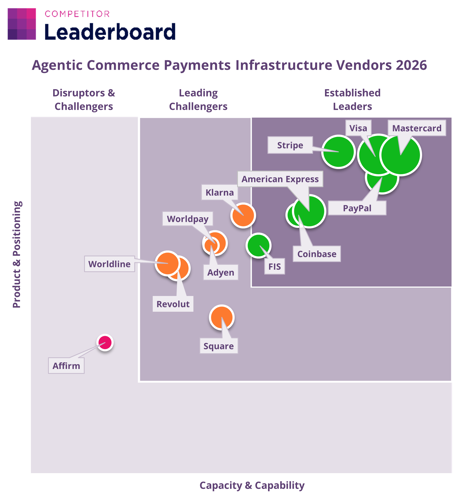
🦾 Agentic Commerce Set to Generate $1.5 Trillion Globally by 2030, as Payments Infrastructure Leaders Revealed [New Research]
SMART CITIES & SUSTAINABILITY
Strait of Hormuz Disruption Drives Electric Vehicle Surge

The war in Iran and the disruption of the Strait of Hormuz — a route responsible for around 20% of global oil flows — has sent energy markets into shock; with prices surging and supply chains under strain.
This comes at a difficult moment for electric vehicles (EVs), where adoption has fallen short of expectations and manufacturers have begun scaling back targets. Rising fuel costs may now provide a tailwind for EV demand, but structural barriers — including cost, infrastructure, and charging access — remain firmly in place.
Distilled…
🟣 EV adoption still depends heavily on government support. The removal of tax credits in the US has weighed on the market, while mixed messaging in countries such as the UK has done little to strengthen confidence. Infrastructure rollout also remains reliant on public backing, particularly for large-scale charging networks. Although oil supply disruption may drive increased support for electrification and renewables, there is limited evidence of this in the US, with Europe better positioned to lead. Ultimately, limited access to home charging means governments must prioritise making charging easier at home or within local areas.
🟣 Consumer interest in EVs is rising in response to the crisis. Data from Edmunds shows EVs accounting for a greater share of overall vehicle research activity following the beginning of the war, while in Australia, EVs doubled their share of new vehicle registrations year-on-year in March 2026. In the UK, leasing demand tracked by Octopus Energy has also increased by 36%. These indicators point to a clear shift in consumer appetite, with interest strengthening even if adoption has yet to fully follow.
🟣 Technological and market improvements are gradually strengthening the EV proposition. New models such as the BMW iX3 are extending range, while BYD continues to push faster charging capabilities. At the same time, lower-cost models including the Renault 5 and Nissan Leaf are improving affordability. Depreciation is also driving a more accessible used market, further supporting demand. Progress is clear, but mass adoption will depend on how quickly these gains translate into lower costs and greater convenience.
IOT & EMERGING TECHNOLOGY
Physical AI Is Moving into the Real World — Here’s What’s Changed

As the US marks National Robotics Week, it’s clear that physical AI is hitting an inflection point. What has largely been confined to pilots and demos is now starting to translate into real-world deployment.
Ahead of our upcoming Physical AI in Manufacturing & Logistics research, out next Monday, our early findings show more than 400,000 physical AI systems will be deployed across manufacturing and logistics by 2030 — a 3,500% increase from 2026. So what’s changed to make this level of deployment possible?
🟣 Advances in edge AI and on-device compute are enabling physical AI systems to process sensory data in real time; supporting faster and more autonomous decision-making on the factory floor. This is critical in environments where systems must operate safely alongside humans, with reduced latency improving both responsiveness and reliability. As a result, physical AI is becoming viable for time-sensitive industrial applications that were previously out of reach.
🟣 Improvements in simulation environments and synthetic data generation are making it easier to train models that perform consistently in real-world conditions. Historically, translating simulated training into reliable performance has been a key barrier. This is now being addressed, enabling more effective pre-deployment testing, as well as ongoing optimisation through predictive maintenance and performance modelling.
🟣 Emerging vision-language-action models are combining visual, linguistic, and tactile inputs; giving physical AI systems a more complete understanding of their environment. By incorporating a sense of touch alongside vision and reasoning, these systems are becoming significantly more capable in tasks requiring precision, adaptability, and interaction with physical objects — unlocking more complex use cases across manufacturing and logistics.
Latest research, whitepapers & press releases
-
 ReportApril 2026IoT & Emerging Technology
 Molly GatfordPhysical AI in Manufacturing & Logistics Market: 2026-2030
Our Physical AI in Manufacturing and Logistics research suite provides in-depth analysis of the key economic, operational, and technological factors driving growth in this fast-growing market.
VIEW -
 ReportApril 2026Fintech & Payments
 Nick MaynardAgentic Commerce Market: 2026-2031
Juniper Research’s Agentic Commerce research suite provides an insightful analysis of this rapidly emerging market; enabling stakeholders, including AI developers, payment infrastructure providers, eCommerce marketplaces, merchants and many others, to understand future growth, key trends, and the competitive environment.
VIEW -
 ReportMarch 2026Fintech & Payments
 Michael GreenwoodB2B Payment Cards Market: 2026-2030
Our B2B card payments research suite provides detailed analysis of this rapidly changing market; allowing B2B card providers to gain an understanding of key payment trends and challenges, potential growth opportunities, and the competitive environment.
VIEW -
 ReportMarch 2026Telecoms & Connectivity
 Alex WebbDirect Carrier Billing Market: 2026-2030
Our Direct Carrier Billing research suite for mobile network operators provides detailed analysis and strategic recommendations for the direct carrier billing market over the next four years.
VIEW -
 ReportMarch 2026Fintech & Payments
 Lorien CarterCross-border Payments Market: 2026-2030
Our Cross-border Payments research suite provides a comprehensive and in-depth analysis of the evolving cross-border payments landscape; enabling stakeholders such as businesses, financial institutions, payment service providers, card networks, regulators, and technology infrastructure providers to understand future growth, key trends, and the competitive environment.
VIEW -
 ReportFebruary 2026Telecoms & Connectivity
 Ardit BallhysaMobile Messaging Market: 2026-2030
Juniper Research’s Mobile Messaging research suite provides mobile messaging vendors, mobile network operators, and enterprises with intelligence on how to capitalise on changing market dynamics within the mobile messaging market.
VIEW


-
 WhitepaperApril 2026IoT & Emerging Technology
Molly Gatford
WhitepaperApril 2026IoT & Emerging Technology
Molly GatfordKey Growth Opportunities for Physical AI in 2026
Our complimentary whitepaper, Key Growth Opportunities for Physical AI in 2026, provides insight into the rapidly evolving physical AI in manufacturing and logistics market; highlighting the countries in which high demand for automation in these industries is anticipated over the next five years.
VIEW -
 WhitepaperApril 2026Fintech & Payments
Nick Maynard
WhitepaperApril 2026Fintech & Payments
Nick MaynardAgentic Commerce - Revolution or False Dawn?
Our complimentary whitepaper assesses the trends that are increasing agentic commerce adoption, and challenges to agentic commerce usage. Additionally, it includes a forecast summary of the global spend on agentic commerce by 2030.
VIEW -
 WhitepaperMarch 2026Fintech & Payments
Michael Greenwood
WhitepaperMarch 2026Fintech & Payments
Michael GreenwoodHow B2B Payment Cards Are Streamlining Corporate Expenses
Our complimentary whitepaper, How B2B Payment Cards Are Streamlining Corporate Expenses, examines the state of the B2B payment cards market; considering its impact on different geographies and how it is shaping the modern B2B payments landscape through card controls, payment data analysis tools, and fully integrated spend management solutions.
VIEW -
 WhitepaperMarch 2026Telecoms & Connectivity
Alex Webb
WhitepaperMarch 2026Telecoms & Connectivity
Alex WebbDirect Carrier Billing: Unlocking Emerging Revenue Streams for Operators
Our complimentary whitepaper, Direct Carrier Billing: Unlocking Emerging Revenue Streams for Operators, explores the emerging opportunities for mobile network operators to monetise direct carrier billing.
VIEW -
 WhitepaperMarch 2026Telecoms & Connectivity
Molly Gatford
WhitepaperMarch 2026Telecoms & Connectivity
Molly GatfordMWC 2026: What's Next for Mobile?
Our latest whitepaper distils the most important announcements from MWC Barcelona 2026 and examines what they mean for the telecoms market over the year ahead. From network APIs and 5G monetisation to AI-RAN, direct-to-cell connectivity, and 5G-Advanced, it explains where the biggest opportunities — and challenges — will emerge next.
VIEW -
 WhitepaperMarch 2026Fintech & Payments
Lorien Carter
WhitepaperMarch 2026Fintech & Payments
Lorien CarterThe Transformation of Cross-border Payment Infrastructure
Our complimentary whitepaper, The Transformation of Cross-border Payment Infrastructure, examines the state of the cross-border payments market; explaining the role of key actors in transforming the cross-border payment experience, as well as the current landscape and recent developments within the cross-border payments industry.
VIEW


-
IoT & Emerging Technology
Physical AI Deployments in Manufacturing & Logistics to Reach 400,000 Systems by 2030
April 2026 -
Fintech & Payments
Agentic Commerce Set to Generate $1.5 Trillion Globally by 2030, as Payments Infrastructure Leaders Revealed
April 2026 -
Fintech & Payments
B2B Card Payments to Reach $11 Trillion Globally in 2030, Accelerated by Increased Corporate Use
March 2026 -
Telecoms & Connectivity
Direct Carrier Billing to Grow by $35 Billion Globally Over the Next Four Years, as Anti-fraud Capabilities Are Enhanced by Network APIs
March 2026 -
Fintech & Payments
Sophisticated Microfinance Services Spend to Surpass $22 billion By 2030, as Mobile Money Services in Emerging Markets Mature
March 2026 -
Fintech & Payments
Top Three Global Leaders in Cross-border Payment Infrastructure Revealed
March 2026