The Distillery: EE Launches Fast Lane and Visa Joins BLOOM Initiative


In this edition:
- UK's first commercial network slice: EE introduces a Commercial 5G Network Slicing Service
- Visa announces a new milestone: It has officially joined the Monetary Authority of Singapore (MAS)-led initiative
- Networking opportunity: Meet us at Capacity Europe 2026 in London to explore new opportunities
- Stripe's new acquisition: Stripe announced an agreement to acquire OpenRouter for over $7 Billion
TELECOMS & CONNECTIVITY
EE Launches Fast Lane - a Commercial 5G Network Slicing Service

EE has introduced the UK's first commercial network slice; providing both consumers and small and medium enterprises (SMEs) with dedicated 5G+ connectivity. Known as EE Fast Lane, the service builds on numerous successful 5G+ network slicing trials. The EE Fast Lane service anticipates network congestion, moving mobile subscribers to the network slice when necessary; ensuring they can continue to receive a high quality of service where 5G+ coverage is available.
Distilled…
🟣 EE Fast Lane strengthens its premium positioning - By adding priority network access via network slicing, EE is further strengthening its premium positioning; differentiating its services from competing high-end mobile subscriptions. The service costs an additional £5 per month for customers using its Full Works and Full Works business plans, and is also bundled with its new EE Full Works Plus plan.
🟣 Has commercial network slicing finally arrived? - EE has joined a number of mobile network operators offering commercial network slicing services. For example, Verizon offers its Frontline Network Slice for first responders, and Telstra offers its Dynamic 5G which optimises traffic networks, assets, and supports detailed analytics. Network slicing is yet to live up to the potential projected at the beginning of the 5G era, however it is increasingly becoming a commercial service readily available to both enterprises and consumers.
🟣 Will network slicing drive new revenue streams - Whilst network slicing technology is increasingly becoming commercialised, it is yet to drive significant revenue for mobile network operators. Services such as EE’s Fast Lane raise the quality of service, but Juniper Research believes the greatest opportunities will target specific use cases and outcomes for consumers and enterprises, rather than more generic connectivity upgrades. Following generic connectivity enhancements, EE and other mobile network operators should target specific upgrades for use cases such as livestreaming, video streaming, and mobile hotspots.
MORE TELECOMS INSIGHTS
📡 What Happens When Data Bundles Eclipse Consumer Demand? [Blog]
📶 Juniper Research Predicts the US and South Korea Will Lead 6G Launches in 2029 [Research]
🗼 No Tower? No Problem: How Direct to Cell is Rewriting the Rules of Connectivity [Whitepaper]
FINTECH & PAYMENTS
Visa Joins MAS-led BLOOM Initiative

Visa has officially joined the Monetary Authority of Singapore (MAS)-led Borderless, Liquid, Open, Online, Multi-currency (BLOOM) initiative; marking a significant step in bridging traditional payment infrastructure with regulated stablecoin networks. BLOOM was launched in October 2025, with the aim to explore how financial institutions can adopt faster, more programmable payment and settlement capabilities without compromising regulatory safeguards.
Announced on August 25, 2026, this move positions Visa as the first major card network to participate in this regulator-supervised framework, aimed at enabling interoperability between conventional financial systems and blockchain-based settlement rails. Key objectives of this move include enabling settlements seven days a week including bank holidays and weekends, overcoming business-day limitations of legacy systems, supporting stablecoins backed by major currencies such as the US dollar and Euro under MAS regulatory supervision, and standardising compliance across borders.
As part of its BLOOM participation, Visa has selected Nium, a cross-border payments platform, as its first pilot partner to test stablecoin-based settlement under the initiative. The pilot will focus on cross-border settlement flows, continuous settlement operations, and leveraging Visa’s existing infrastructure, including its security, compliance, and fraud prevention capabilities.
Distilled…
🟣 Strategic significance - The BLOOM initiative differs from Visa’s existing bilateral stablecoin settlements in that it operates under MAS regulatory supervision. This provides a standardised compliance architecture that multiple institutions can adopt consistently; reducing fragmentation.
🟣 Market positioning - Visa reinforces its leadership in the convergence of traditional finance and crypto-native payment rails, particularly in Asia’s rapidly evolving digital payments landscape.
🟣 What’s next? - Whilst no timeline for deployment has been disclosed, the initiative represents a critical testing ground for how regulated stablecoins can complement, rather than replace, existing payment infrastructure.
MORE FINTECH INSIGHTS
📠 From Transaction to Transformation: The Future of POS [Whitepaper]
📲 Contact-free Payments Become the Default as Contactless Transactions Exceed $32 Trillion Globally by 2031 [Research]
JOIN US AT
Capacity Europe 2026 in London
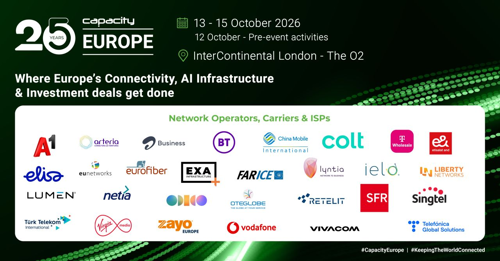
The companies shaping Europe’s connectivity landscape are coming to Capacity Europe 2026. This is where Europe’s connectivity, AI infrastructure and investment deals happen.
Join 4,000+ decision makers across connectivity, cloud, datacentres and AI infrastructure.
From major network operators and global carriers to ISPs and infrastructure providers, the industry will be in London this October to connect, meet and explore business opportunities.
📅 12 October – Pre-event activities
📅 13–15 October – Main event
📍 InterContinental London - The O2
Planning on attending? Arrange a meeting with the Juniper Research team — we’d love to connect and explore further.
Register today to access the networking platform, explore the attendee list, and start booking meetings before diaries fill up.
FINTECH & PAYMENTS
Stripe Acquires OpenRouter for More than $7 Billion

Stripe has announced that it has agreed to acquire OpenRouter, an AI model gateway routing requests across more than 400 models from over 80 providers through a single interface.
Whilst the exact figures are unverified, New York Times reported an offer of $7.5 billion in cash and stock, with $1.5 billion going to the founders and the remaining $6 billion to investors. Interestingly, around three months earlier, OpenRouter raised $113 million at a valuation of approximately $1.3 billion; placing the acquisition almost six times its previous valuation. The deal, when finalised, will be the largest in Stripe’s history, and complements related infrastructure acquisitions such as Bridge in February 2025, Privy in June 2025, and Metronome in January 2026.
Distilled…
🟣 Stripe is positioning itself on both sides of AI economics - Metronome, which meters what AI businesses charge its customers, gives Stripe insight into inference pricing. Adding OpenRouter will let Stripe see what those businesses pay for inference. This combination would allow Stripe to gain valuable insights into contribution margin per token: the difference between what an AI company charges its customer and what it paid in inference to deliver that feature.
🟣 The acquisition will provide Stripe with valuable data - OpenRouter is the broadest cross-model view of where inference demand goes – though it skews toward developers and open-weight models. Regardless, paired with Metronome, it gives Stripe the two-sided visibility that underwriting requires; opening a path to underwriting compute, such as prepaid credits, inference financing, and spend floats – similar to the way it underwrites merchants with Stripe Capital.
🟣 Can OpenRouter stay neutral under Stripe? - Following the announcement of the acquisition, the neutrality of OpenRouter was questioned by critics, due to Stripe’s competing commercial interests: it processes payments for most frontier AI labs and now owns the router where those companies compete. The question is whether the routing algorithm will continue to be genuinely agnostic to Stripe’s billing interests, or whether Stripe will quietly deprioritise models as it manages competing commercial relationships.
THE LAST DROP
Fingerprint: The Technology Behind One-click Checkouts [Blog]
🛰️ Beyond LEO: Why VLEO is Becoming the Next Growth Market [Whitepaper]
🤖 Paying at Agentic Speed: Inside Visa, Mastercard, and Stripe’s Agentic Commerce Push [Blog]
Related Research
-
 ReportFebruary 2026Telecoms & Connectivity
 Molly GatfordRCS for Business Market, 2026-2030
Our comprehensive RCS for Business research suite provides an in‑depth evaluation of a market poised for rapid expansion over the next five years. It equips stakeholders with clear insight into the most significant opportunities emerging over the next two years.
VIEW -
 ReportJuly 2026Fintech & Payments
 Thomas WilsonNetwork Tokenisation Market, 2026-2031
Our Network Tokenisation research suite provides a comprehensive and in-depth analysis of the ecosystem surrounding network tokenisation, enabling stakeholders such as merchants, payment gateways, token service providers and token requestors to understand future growth, key trends and the competitive environment.
VIEW -
 ReportJuly 2026Emerging Technology
 Saffron DusanjhVLEO Satellite Market, 2026-2031
Our Very Low Earth Orbit (VLEO) Satellite Market research suite provides comprehensive analysis of one of the fastest-emerging markets within the global space economy.
VIEW
Latest research, whitepapers & press releases
-
 ReportOctober 2026Fintech & Payments
 Jawad JahanCrypto-gaming Market: 2026-2035
Our Crypto-gaming Market research suite provides an insightful analysis of this rapidly growing market; enabling stakeholders - from crypto-gaming and sportsbooks operators, prediction market platforms, business-to-business (B2B) gambling platforms and software providers, to crypto payment processors and regulators - to understand future growth, key trends, and the competitive environment.
VIEW -
 ReportOctober 2026Telecoms & Connectivity
 Alex WebbRetail Roaming Market: 2026-2031
Our Retail Roaming research suite for mobile network operators (MNOs) and mobile virtual network operators (MVNOs) provides detailed analysis and strategic recommendations for the next era of retail roaming.
VIEW -
 ReportSeptember 2026Fintech & Payments
 Dr Manju ChhillarEmbedded Finance Market: 2026-2031
Embedded finance is one of the fastest-growing markets in financial services, and is about to accelerate even further. Our Embedded Finance Market research provides detailed analysis of the key drivers behind this growth, and what these mean for stakeholders in this market.
VIEW -
 ReportSeptember 2026Identity & Security
 Thomas WilsonApplication Security Market: 2026-2031
Our Application Security research suite provides detailed analysis of this emerging market; allowing application security providers to gain an understanding of key security trends and challenges, potential growth opportunities, and the competitive environment.
VIEW -
 ReportSeptember 2026Fintech & Payments
 Shane O'SullivanBanking Fraud Prevention Market: 2026-2031
Our Banking Fraud Prevention research suite provides a comprehensive and in-depth analysis of the types of fraud currently impacting the banking sector, and the evolving methods that can be used to overcome them.
VIEW -
 ReportSeptember 2026Telecoms & Connectivity
 Nick MaynardPrivate LTE & 5G Networks Market: 2026-2031
Our Private LTE & 5G Networks research suite provides detailed and insightful analysis of this evolving market; enabling stakeholders - from private LTE & 5G network platform specialists, mobile network operators, and diversified technology companies - to understand future growth, key trends, and the competitive environment.
VIEW


-
 WhitepaperOctober 2026Fintech & Payments
Jawad Jahan
WhitepaperOctober 2026Fintech & Payments
Jawad JahanCompliance or Anonymity - The Crypto-gaming Operator’s Dilemma
Our complimentary whitepaper, Compliance or Anonymity - The Crypto-gaming Operator’s Dilemma, analyses the current regulatory landscape of the crypto-gaming market.
VIEW -
 WhitepaperOctober 2026Telecoms & Connectivity
Alex Webb
WhitepaperOctober 2026Telecoms & Connectivity
Alex WebbReimagining the Future of Retail Roaming – How Mobile Network Operators Must Adapt
Our complimentary whitepaper, Reimagining the Future of Retail Roaming – How Mobile Network Operators Must Adapt, explores the emerging opportunities for MNOs within retail roaming.
VIEW -
 WhitepaperSeptember 2026Fintech & Payments
Dr Manju Chhillar
WhitepaperSeptember 2026Fintech & Payments
Dr Manju ChhillarEmerging Markets: The Next Opportunity for Embedded Finance
This free whitepaper examines how a combination of multiple factors is driving North America towards saturation for embedded finance.
VIEW -
 WhitepaperSeptember 2026Emerging Technology
Thomas Wilson
WhitepaperSeptember 2026Emerging Technology
Thomas WilsonVibe Coding: The Fastest-growing Threat to Application Security Today
Our complimentary whitepaper, Vibe Coding: The Fastest-growing Threat to Application Security Today, examines the state of the application security market; considering its impact on different verticals, and how it is being employed in these verticals to best combat malicious attackers and keep sensitive data safe.
VIEW -
 WhitepaperSeptember 2026Fintech & Payments
Shane O'Sullivan
WhitepaperSeptember 2026Fintech & Payments
Shane O'SullivanThe Fraud Frontier: Securing Banking in an AI-driven Era
Our complimentary whitepaper, The Fraud Frontier: Securing Banking in an AI-driven Era, examines the rapidly evolving state of the banking fraud prevention market.
VIEW -
 WhitepaperSeptember 2026Telecoms & Connectivity
Nick Maynard
WhitepaperSeptember 2026Telecoms & Connectivity
Nick MaynardHow Private Cellular Networks Are Unlocking Industry 4.0
Our complimentary whitepaper, How Private Cellular Networks Are Unlocking Industry 4.0, examines how private LTE & 5G networks are reshaping the way industry works.
VIEW


-
Fintech & Payments
Crypto Gaming: Wagers to Reach $1.3 Trillion by 2035, as Crypto Rails Widen Global Access Despite Regulatory Challenges
October 2026 -
Fintech & Payments
Juniper Research Unveils Identity & Security Award Winners for 2026
October 2026 -
Retail Roaming Revenue to Fall $4 Billion By 2031, as Regulatory Restrictions and Competition Bite
October 2026 -
Fintech & Payments
Soft POS to Surpass 100 Million Installations in 2030
September 2026 -
Fintech & Payments
The NextGen Payments & RegTech Forum Arrives in Dubai
September 2026 -
Fintech & Payments
The Global Trade Finance Expo Arrives in Dubai, UAE
September 2026