Revolutionising Mobile Authentication: Are APIs the Key?

Numerous types of fraud are impacting today's telecoms industry, including the exploitation of the weaknesses of SMS as a verification channel to steal personal information and take over a user’s identity. Given the wide demand for authentication services, there is an increasing need for more secure solutions that offer a more seamless experience for users.
One anti-fraud solution, which is being launched by operators globally and is expected to gain traction over the next five years, is standardised anti-fraud APIs (Application Programming Interfaces). APIs are a set of definitions and protocols that allow software applications to communicate with each other and exchange information. With traditional SMS monetisation under threat, both from the rise of fraud including AIT (Artificially Inflated Traffic) and enterprises migrating to alternative channels for rich business messaging, anti-fraud APIs offer operators a new way to monetise their networks.
The need for new revenue streams has resulted in nearly 50 operators worldwide supporting the Open Gateway; an initiative launched by the GSMA in 2023. This initiative helps operators transform their networks into developer-ready platforms with the development of Open Gateway APIs, which are defined and published in CAMARA Project. The aim of the initiative is to create open, standardised APIs for the telecommunications industry, which will allow developers to more seamlessly adopt APIs from operators.
Why Operators Are Embracing Open Gateway APIs
There is a clear focus on Open Gateway APIs for anti-fraud, with more than 30 operators globally launching these APIs to date. With anti-fraud APIs, it is possible for operators to share information on mobile subscriber identity that is contained within their databases; allowing enterprises to request this information to verify the identity of a user.
For example, enterprises can request information about a mobile number from the operator. The mobile number provides a way for enterprises to verify the identity of a user and is already used for SMS OTPs (One-Time Passwords). Since the mobile number is already a widely accepted form of identity verification, enterprises will be open to new authentication solutions that use it. AIT is impacting the use of SMS OTP, as it results in lost revenue for enterprises as they pay for traffic being delivered to fake numbers. Therefore, there is demand from enterprises for new solutions that utilise mobile numbers to verify users.
More than 30 operators have commercially launched an anti-fraud API under the GSMA Open Gateway. APIs which have been launched by the most operators include the Number Verification and SIM Swap APIs. The Number Verification API allows for real-time checks of the phone number that is associated with a SIM in a device connected to a mobile data network. Meanwhile, the SIM Swap API checks when the SIM card associated with a mobile number was last changed. When an enterprise uses these APIs in combination, it creates a more frictionless and secure authentication process for the end user, as they are verified automatically and there is less chance of interception.
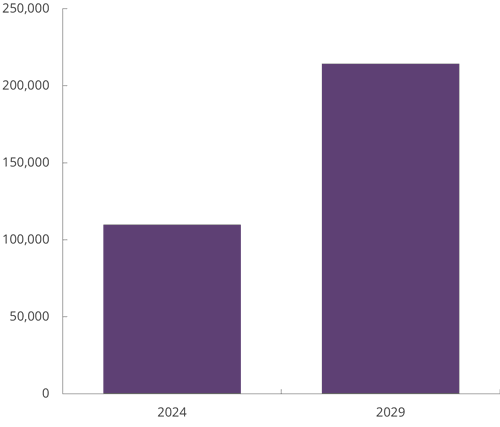
In its recent report, Juniper Research found that operator revenue from fraud prevention APIs will grow 80% over the next five years, from $12 billion in 2024 to more than $22 billion by 2029. It is anticipated that enterprises within the banking and finance industry will be the first to adopt these new anti-fraud APIs, to protect customers from fraudulent transactions.
These APIs are expected to be high volume and low value, as they need to compete with other existing authentication solutions. Therefore, the wide demand for more secure authentication will drive a high volume of traffic over the next five years.
Total Number of Fraud Prevention API Calls (m), 2024 & 2029
Source: Juniper Research
Are APIs the Key?
APIs have several benefits for user identity verification and fraud prevention. They allow for more secure verification of user identity using mobile number, as fraudsters cannot intercept API calls made to the mobile operator in the same way that they can intercept SMS OTP. Moreover, APIs are less vulnerable to AIT, since strict input validation and rate limiting can be put in place to stop excessive requests from a single source.
With Open Gateway, the creation of a unified framework for APIs allows developers to integrate with multiple mobile networks through a single point of access; accelerating time to market for new fraud prevention services. This addresses the previously siloed nature of the telco API market, where developers had to rely on proprietary APIs from specific vendors or platforms.
Whilst APIs can enhance the user experience and will overcome the limitations of SMS OTP, there are also some new challenges facing the telecommunications API industry. Fraud is continuously evolving, and the standardisation of APIs might make it challenging for operators to adapt to new types of fraud. However, the Open Gateway initiative will provide a platform for the development of new APIs to overcome new types of fraud as they emerge, ensuring that these solutions are launched quickly.
Another limitation is that all operators within a country must agree to launch anti-fraud APIs to encourage enterprise adoption. Recently, Singtel and Bridge Alliance partnered to launch the Bridge Alliance API Exchange, which aggregates its 34 operator members’ APIs on a single platform; making it easier for developers to launch new services on these operator networks. Operators that are part of the Bridge Alliance mostly operate within the Asia Pacific region, and the exchange is expected to accelerate the adoption of fraud prevention APIs by enterprises in this region. Similar initiatives are needed in other regions, to encourage operators to launch anti-fraud APIs, and make it easier for enterprises to adopt these.
Operators will have to carefully consider how to price fraud prevention API calls, to ensure that enterprises are not priced out when paying on a per-transaction basis. Another solution that provides a cost-effective alternative to SMS OTP for enterprises is flash calling, which also uses the mobile number for user authentication.
Thus, APIs must not be the only solution that operators are investing in to prevent fraud across their networks. Juniper Research expects that fraud prevention APIs are a tool for operators to commercially test standardised APIs. Fraud prevention use cases are in high demand and, therefore, it makes sense for operators to launch these APIs first to educate the market on standardised APIs, before launching APIs for more complex use cases.
Molly is a Research Analyst at Juniper Research, providing insight, data, and recommendations for established and future markets within the telecommunications sector. Her recent reports include Telecommunications APIs, Travel SIMs & eSIMs, and Generative AI in Mobile Messaging.
Related Research
-
 ReportAugust 2025Telecoms & Connectivity
 Alex WebbNetwork APIs Market, 2025-2030
Our Network API research suite provides operators, CPaaS providers, and other GSMA channel partners with extensive analysis and actionable insights into the rapidly growing network API market. It contains data that allows stakeholders in the market to make informed decisions on their product development and business strategies in the network API market.
VIEW
Latest research, whitepapers & press releases
-
 ReportSeptember 2026IoT & Emerging Technology
 Thomas WilsonApplication Security Market: 2026-2031
Our Application Security research suite provides detailed analysis of this emerging market; allowing application security providers to gain an understanding of key security trends and challenges, potential growth opportunities, and the competitive environment.
VIEW -
 ReportSeptember 2026Fintech & Payments
 Shane O'SullivanBanking Fraud Prevention Market: 2026-2031
Our Banking Fraud Prevention research suite provides a comprehensive and in-depth analysis of the types of fraud currently impacting the banking sector, and the evolving methods that can be used to overcome them.
VIEW -
 ReportSeptember 2026Telecoms & Connectivity
 Nick MaynardPrivate LTE & 5G Networks Market: 2026-2031
Our Private LTE & 5G Networks research suite provides detailed and insightful analysis of this evolving market; enabling stakeholders - from private LTE & 5G network platform specialists, mobile network operators, and diversified technology companies - to understand future growth, key trends, and the competitive environment.
VIEW -
 ReportSeptember 2026Fintech & Payments
 Michael GreenwoodOmnichannel Payment Platform Market: 2026-2031
Our Omnichannel Payment Platform research provides detailed analysis of this rapidly emerging market; allowing omnichannel payment platform providers to gain an understanding of key payment trends and challenges, potential growth opportunities, and the competitive environment.
VIEW -
 ReportSeptember 2026IoT & Emerging Technology
Nick MaynardIdentity & Access Management Market: 2026-2031
ReportSeptember 2026IoT & Emerging Technology
Nick MaynardIdentity & Access Management Market: 2026-2031Our Identity & Access Management research suite provides detailed and insightful analysis of this evolving market; enabling stakeholders - from Identity & Access Management platform specialists, cybersecurity vendors, and diversified technology companies - to understand future growth, key trends, and the competitive environment.
VIEW -
 ReportAugust 2026Fintech & Payments
Nick MaynardContactless Payments Market Data: 2026-2031
ReportAugust 2026Fintech & Payments
Nick MaynardContactless Payments Market Data: 2026-2031Our Contactless Payments market analysis provides exhaustive data coverage of the market in its entirety, including the adoption of mobile wallets featuring contactless payment technology, the growth of contactless transactions, and the market’s associated values.
VIEW


-
 WhitepaperSeptember 2026IoT & Emerging Technology
Thomas Wilson
WhitepaperSeptember 2026IoT & Emerging Technology
Thomas WilsonVibe Coding: The Fastest-growing Threat to Application Security Today
Our complimentary whitepaper, Vibe Coding: The Fastest-growing Threat to Application Security Today, examines the state of the application security market; considering its impact on different verticals, and how it is being employed in these verticals to best combat malicious attackers and keep sensitive data safe.
VIEW -
 WhitepaperSeptember 2026Fintech & Payments
Shane O'Sullivan
WhitepaperSeptember 2026Fintech & Payments
Shane O'SullivanThe Fraud Frontier: Securing Banking in an AI-driven Era
Our complimentary whitepaper, The Fraud Frontier: Securing Banking in an AI-driven Era, examines the rapidly evolving state of the banking fraud prevention market.
VIEW -
 WhitepaperSeptember 2026Telecoms & Connectivity
Nick Maynard
WhitepaperSeptember 2026Telecoms & Connectivity
Nick MaynardHow Private Cellular Networks Are Unlocking Industry 4.0
Our complimentary whitepaper, How Private Cellular Networks Are Unlocking Industry 4.0, examines how private LTE & 5G networks are reshaping the way industry works.
VIEW -
 WhitepaperSeptember 2026Fintech & Payments
Michael Greenwood
WhitepaperSeptember 2026Fintech & Payments
Michael GreenwoodHow Omnichannel Payment Platforms Are Streamlining Merchant Operations
Our complimentary whitepaper, How Omnichannel Payment Platforms Are Streamlining Merchant Operations, examines how merchants are utilising omnichannel payment platforms to capitalise on customer data and integration with other business management software in order to minimise inefficiency.
VIEW -
 WhitepaperSeptember 2026Telecoms & Connectivity
 Jawad Jahan
Beyond the Headlines: What the 'AI Bubble' Really Means
Our complimentary whitepaper, Beyond the Headlines – What the 'AI Bubble' Really Means, analyses the scale and structure of AI infrastructure investment in the West, and the channels through which it could transmit stress to the wider financial system.
VIEW -
 WhitepaperSeptember 2026IoT & Emerging Technology
Nick Maynard
WhitepaperSeptember 2026IoT & Emerging Technology
Nick MaynardNon-human Identities ~ Transforming Identity & Access Management
Our complimentary whitepaper, Non-human Identities ~ Transforming Identity & Access Management, examines how non-human identities are revolutionising the Identity & Access Management market.
VIEW


-
IoT & Emerging Technology
AppSec Enterprise Spend to Approach $13 Billion Globally by 2031, as Market Leaders Revealed in New Competitor Leaderboard
September 2026 -
Banking Fraud to Reach 2.2 billion Transactions by 2031, Fuelled by Growing AI-enabled Attacks
September 2026 -
Telecoms & Connectivity
Private Network Spend to Exceed $84 Billion Globally by 2031, as Market Leaders Set to Capitalise
September 2026 -
Fintech & Payments
The 6th Financial Innovation Forum – Payments & RegTech Arrives in London
September 2026 -
Fintech & Payments
Omnichannel Payment Platform Revenue to Exceed $100 Billion Globally by 2031, as Leading Platforms Set to Capitalise Are Revealed
September 2026 -
Telecoms & Connectivity
Calling the Game-changers in Telco: 2027 Future Digital Awards are Now Open for Entries
September 2026