Physical AI Was Everywhere at CES '26. But What Happens Next?

Physical AI was one of the standout themes at CES 2026, spanning everything from humanoid robots to autonomous driving. At its core, physical AI refers to artificial intelligence designed to perceive and interact with the real world by being embedded in hardware — most notably, robotics.
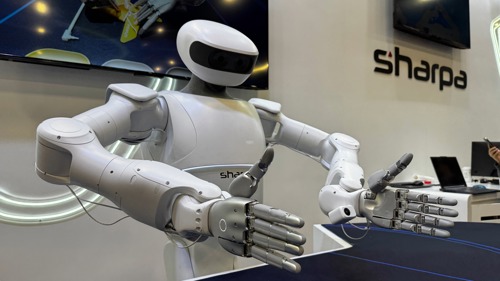
What makes physical AI so disruptive is the way it combines advanced AI frameworks with robotics hardware to autonomously carry out complex, real-world tasks. Because these systems can learn and operate in live environments, sectors such as manufacturing, logistics, healthcare, and retail stand to unlock new levels of automation and scalability. Robotics itself isn’t new, but the emergence of foundational models for physical AI is what’s pushing the market forward; enabling far greater autonomy across a much broader range of use cases.
Autonomous Vehicles Leading the Way
While robots may have grabbed the headlines at CES, the most immediate opportunity for physical AI is likely to sit within the automotive sector; particularly autonomous vehicles (AVs) and autonomous driving. That’s largely because manufacturers can begin to monetise these capabilities over time, helped along by rapid progress in AI performance and efficiency.
One of the most notable announcements came from NVIDIA, which unveiled Alpamayo: a family of open AI models, simulation tools, and datasets designed to accelerate the development of reasoning-based AVs. The platform introduces vision-language-action (VLA) models, allowing vehicles to interpret their surroundings, reason in real time, and respond more like a human driver across a wide range of scenarios.
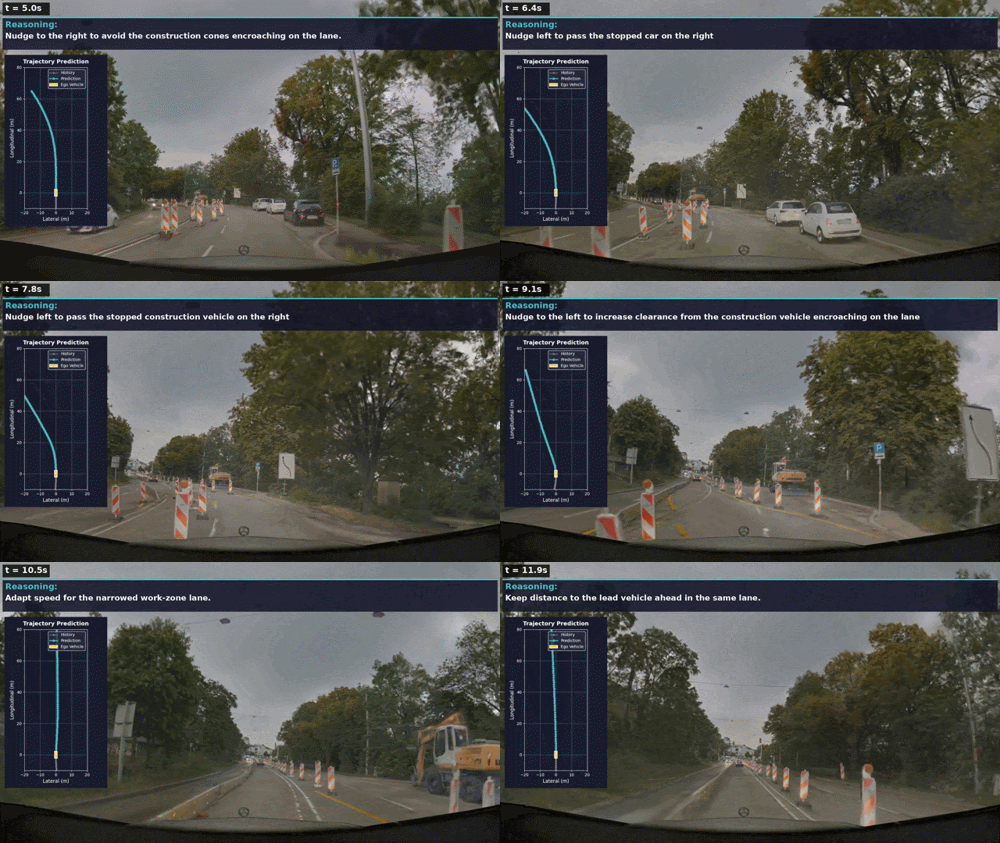 Source: NVIDIA
By making Alpamayo open source, automotive OEMs can integrate it alongside their own systems and tailor it to new use cases: from advanced off-road driving to next-generation mobility services. Just as importantly, this open approach lowers the barrier to entry across the AV ecosystem, encouraging competition and, ultimately, faster innovation.
But Humanoid Robots Are Catching Up Fast
That said, physical AI isn’t only about vehicles. We expect some of the most significant long-term momentum to come from humanoid robotics, particularly as robots begin incorporating multimodal reasoning models such as NVIDIA's Isaac GR00T N1. These models support reinforcement learning and are trained in realistic environments, which makes them especially well suited to the diverse and unpredictable tasks humanoid robots are expected to perform.
The open-source nature of these foundational models is a major reason why we believe adoption will accelerate. Smaller manufacturers and new entrants can access the same underlying intelligence as larger players, speeding up experimentation and commercial deployment.
 Source: Tony Crabtree
These models provide a strong platform for growth, but they’re only the first step. The humanoid robotics market - especially in manufacturing and training environments - is set to scale rapidly over the next few years. That growth will depend heavily on manufacturers’ ability to ramp up production, something companies like Tesla and Figure AI are already targeting, with both aiming to produce more than 10,000 units next year.
Importantly, these robots won’t be limited to enterprise settings. Many are expected to move into homes as well. This is where reinforcement learning really comes into its own, allowing robots to adapt and improve across a wide range of tasks over time; provided the hardware is capable.
A good example of this in practice came from AGIBOT, which showcased its lineup of humanoid robots at CES. The company claims to have already shipped more than 5,000 units, covering use cases ranging from hospitality reception and logistics sorting to security, manufacturing, and education. What stood out was the breadth of applications: a clear sign that general-purpose humanoid robots are already finding commercial demand.
Looking ahead to 2026, we expect AI models to continue improving accuracy for specific manufacturing tasks. However, the bigger challenge - and opportunity - will be extending these capabilities into more general consumer-focused roles. While much of the recent attention has been on training frameworks, AGIBOT’s progress shows that demand for flexible, general-purpose robots already exists.

Source: AGIBOT
Shifting from Hype to ROI
We expect governments and national bodies to introduce clearer guidance around the ethical deployment and use of AI, likely on a country-by-country basis. The priority will be end-user safety, but regulation will need to remain flexible enough to keep pace with how quickly AI is evolving.
What CES 2026 made clear is that physical AI and robotics have moved beyond pure experimentation and into early commercial deployment. That said, the robotics market has been here before - and suffered from early hype cycles. This time feels different. Broader, more capable AI frameworks significantly improve the value proposition for end users, while vendors across both hardware and AI will now need to focus on something much more grounded: proving real return on investment by onboarding and retaining customers.
 Source: Tony Crabtree
Ardit works within the Telecoms & Connectivity team; providing insights and strategic recommendations on current and future markets within the telecoms industry. His primary area of focus is on operator and CSP strategies. He previously worked at GlobalData for four years where he covered the technology and telecommunications industries, and prior to that, worked at Gartner for two years.
Related Research
-
 ReportDecember 2025Telecoms & Connectivity
 Molly Gatford
AI Agents for Customer Experience Platforms Market, 2025-2030
Our comprehensive AI Agents for Customer Experience Platforms research suite comprises detailed assessment of a market that is set to disrupt mobile communications. It provides stakeholders with insight into the key opportunities within the AI agents for customer experience platforms market over the next two years.
VIEW -
 ReportFebruary 2025Conversational AI
Molly Gatford
ReportFebruary 2025Conversational AI
Molly GatfordConversational AI Market, 2025-2029
Our latest Conversational AI research suite comprises a comprehensive analysis of the key factors driving this evolving market in 2025, with specific focus on technological advancements enabling greater automation of business communications; including generative AI and agentic AI.
VIEW
Latest research, whitepapers & press releases
-
 ReportFebruary 2026Telecoms & Connectivity
 Ardit BallhysaMobile Messaging Market: 2026-2030
Juniper Research’s Mobile Messaging research suite provides mobile messaging vendors, mobile network operators, and enterprises with intelligence on how to capitalise on changing market dynamics within the mobile messaging market.
VIEW -
 ReportFebruary 2026Fintech & Payments
 Shane O'SullivanKYC/KYB Systems Market: 2026-2030
Our KYC/KYB Systems research suite provides a detailed and insightful analysis of an evolving market; enabling stakeholders such as financial institutions, eCommerce platforms, regulatory agencies and technology vendors to understand future growth, key trends and the competitive environment.
VIEW -
 ReportFebruary 2026Telecoms & Connectivity
 Molly GatfordRCS for Business: 2026-2030
Our comprehensive RCS for Business research suite provides an in‑depth evaluation of a market poised for rapid expansion over the next five years. It equips stakeholders with clear insight into the most significant opportunities emerging over the next two years.
VIEW -
 ReportFebruary 2026Fintech & Payments
 Jawad JahanMobile Money in Emerging Markets: 2026-2030
Our Mobile Money in Emerging Markets research report provides detailed evaluation and analysis of the ways in which the mobile financial services space is evolving and developing.
VIEW -
 ReportJanuary 2026IoT & Emerging Technology
 Louis AtkinPost-quantum Cryptography Market: 2026-2035
Juniper Research’s Post-quantum Cryptography (PQC) research suite provides a comprehensive and insightful analysis of this market; enabling stakeholders, including PQC-enabled platform providers, specialists, cybersecurity consultancies, and many others, to understand future growth, key trends, and the competitive environment.
VIEW -
 ReportJanuary 2026Telecoms & Connectivity
 Alex WebbMVNO in a Box Market: 2026-2030
Juniper Research’s MVNO in a Box research suite provides Mobile Virtual Network Enablers, Mobile Virtual Network Aggregators, and other players with detailed analysis and strategic recommendations for monetising demand for MVNO in a Box services.
VIEW


-
 WhitepaperFebruary 2026Telecoms & Connectivity
Ardit Ballhysa
WhitepaperFebruary 2026Telecoms & Connectivity
Ardit BallhysaHow Social Media Will Disrupt Mobile Messaging Channels in 2026
Our complimentary whitepaper, How Social Media Will Disrupt Mobile Messaging Channels in 2026, explores the challenges and opportunities for operators and enterprises as social media traffic continues to increase.
VIEW -
 WhitepaperFebruary 2026Telecoms & Connectivity
 Sam Barker
Protecting Users from Scam Ads: A Call for Social Media Platform Accountability
In this new whitepaper commissioned by Revolut, Juniper Research examines how scam advertising has become embedded across major social media platforms, quantifies the scale of user exposure and financial harm, and explains why current detection and enforcement measures are failing to keep pace.
VIEW -
 WhitepaperFebruary 2026Fintech & Payments
Shane O'Sullivan
WhitepaperFebruary 2026Fintech & Payments
Shane O'SullivanKnow Your Agents (KYA): The Next Frontier in KYC/KYB Systems
Our complimentary whitepaper, Know Your Agents (KYA): The Next Frontier in KYC/KYB Systems, examines the state of the KYC/KYB systems market; considering the impact of regulatory development, emerging risk factors such as identity enabled fraud, and how identity and business verification is evolving beyond traditional customer and merchant onboarding toward agent-level governance.
VIEW -
 WhitepaperFebruary 2026Telecoms & Connectivity
Molly Gatford
WhitepaperFebruary 2026Telecoms & Connectivity
Molly Gatford3 Key Strategies for Capitalising on RCS Growth in 2026
Our complimentary whitepaper, 3 Key Strategies for Capitalising on RCS Growth in 2026, explores key trends shaping the RCS for Business market and outlines how mobile operators and platforms can accelerate adoption and maximise revenue over the next 12 months.
VIEW -
 WhitepaperFebruary 2026Fintech & Payments
Jawad Jahan
WhitepaperFebruary 2026Fintech & Payments
Jawad JahanThe Next Steps for Mobile Money – Interoperability and Openness
Our complimentary whitepaper, The Next Steps for Mobile Money – Interoperability and Openness, analyses how interoperability and open platforms can drive new growth opportunities through partnerships with key stakeholders.
VIEW -
 WhitepaperJanuary 2026IoT & Emerging Technology
Louis Atkin
WhitepaperJanuary 2026IoT & Emerging Technology
Louis AtkinPreparing for Q-Day: Post-quantum Security Shift
Our complimentary whitepaper, Preparing for Q-Day: Post-quantum Security Shift, assesses the factors which are increasing interest in adopting PQC, and challenges to PQC adoption. Additionally, it includes a forecast summary of the global spend on PQC by 2035.
VIEW


-
Telecoms & Connectivity
MVNO Subscriber Revenue to Exceed $50 Billion Globally in 2030
March 2026 -
Fintech & Payments
QUBE Events is excited to bring back the 24th NextGen Payments & RegTech Forum - Switzerland
February 2026 -
Telecoms & Connectivity
OTT Messaging Apps to Exceed 5 Billion Users Globally by 2028; Driving Shift in Enterprise Communication Strategies
February 2026 -
Fintech & Payments
Calling All Fintech & Payment Innovators: Future Digital Awards Now Open for 2026
February 2026 -
Telecoms & Connectivity
Operator RCS for Business Revenue to Reach $3 Billion Globally by 2027, Growing 150% in Two Years
February 2026 -
Fintech & Payments
KYC & KYB Systems Spend Outside Financial Sector to Grow 105% by 2030 Globally, as KYC Moves Beyond Banking
February 2026