Is 2025 the Year of Digital ID in the UK?

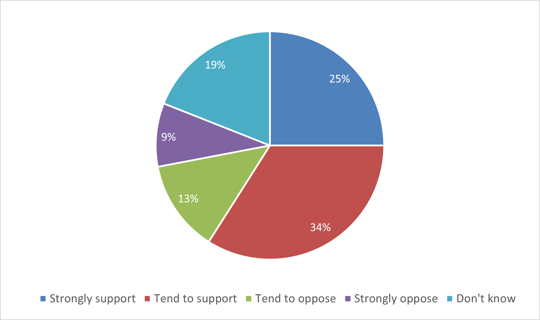
The UK is a market often noted for its resistance to digital ID or national identity systems in general. It is often believed that the UK public are less open to the idea than citizens of other countries and prioritise privacy over the efficiency gains a digital ID system could offer. However, this is slowly changing, as indicated by a YouGov poll in December 2024 which found strong support for a system of national identity cards in the UK.
Question: Would you support or oppose the introduction of a
system of national identity cards in Britain?
Source: YouGov
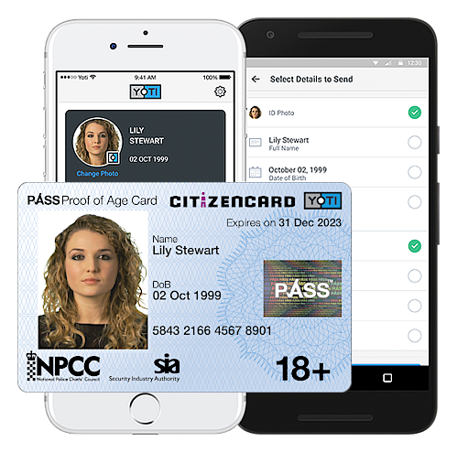
Another significant movement in December 2024 occurred with the unveiling of new proposed legislation that, if passed, would enable UK residents to use digital IDs to verify their age when buying alcohol. This will be applicable in pubs, clubs, and shops. The IDs will be provided by third-party companies and checked against government records, with these checks carried out by either NFC or QR codes, ensuring the process is streamlined. These digital IDs will also not reveal the user’s name or address, as is the case with traditional IDs.
These changes will come from the Data (Use and Access) Bill, introduced to Parliament in 2024. The bill is currently in the House of Lords, with it still needing to pass the House of Commons and gain Royal Assent before it becomes law. In its press release, the Department for Science, Innovation and Technology state they expect it to be in force by the end of 2025.
This follows on from the 2023 decision, by the previous government, to allow UK citizens to upload identity documents to apps in order to carry out Disclosure and Barring Service (DBS), right to work, and right to rent checks. These services are provided by third-party identity services, such as Yoti, and it is expected that the same companies will be involved in the provision of the new digital IDs.
Source: Yoti
It is worth stressing that this will be a fairly limited programme, with participation entirely optional for both consumers and businesses. This will likely result in slow and uneven adoption, as was seen with the 2023 roll-out of digital IDs, with the vast majority of locations which accepted these IDs being in London or other major cities. This is due to the fact that consumers are unlikely to adopt the technology unless it is usable in a good number of the locations they use. Equally, businesses are less likely to adopt it if consumers are not using it. This results in the market for these technologies taking longer to reach critical mass and become widespread.
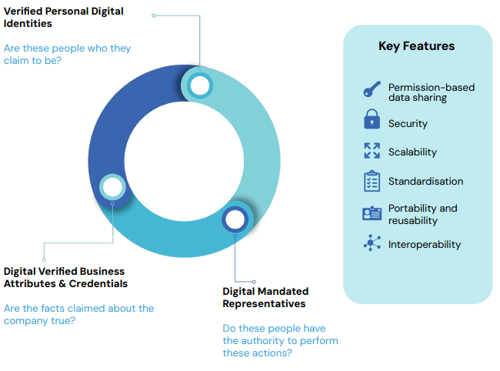
It is not only in the consumer sector that digital identity is growing in the UK. In December 2024, a coalition of leading financial institutions and technology companies, led by the UK’s Centre for Finance and Innovation Technology (CFIT), unveiled their progress on designing a digital company ID.
Proposed Components of 'Digital Company ID'
Source: CFIT
The proposed model would enable CFIT to create a working prototype, in the form of a virtual passport for businesses. CFIT suggest that the widespread adoption of a digital company ID would help prevent fraud, boost efficiencies for banks and other financial institutions. This work was supported by the Chancellor, in the National Payments Vision published in November 2024, with the document pledging to ‘consider any finding that emerge from CFIT’s work in due course’. CFIT will announce the results, recommendations and next steps from its programme in March 2025.
The adoption of digital IDs for businesses would reduce fraud as it is more challenging to fake a digital identity. This would give businesses the confidence that those they transfer money to are who they claim to be. The IDs would also be used for Know Your Business (KYB) checks, along with ultimate beneficial owners (UBO) checks and comparison to anti-money laundering (AML) databases. If implemented well, this technology could not just reduce financial crime but also allow businesses to save costs on carrying out these checks by conventional methods. Adoption in the financial sector is likely to be strong if made available, as several major FIs are already involved in the project. Regulatory support is also likely as the Financial Conduct Authority (FCA) and the Payment Systems Regulator (PSR) are both involved.
With both these announcements coming at the end of 2024, 2025 is shaping up to be a big year for digital identity in the UK. While it seems unlikely there will be widespread adoption of a digital ID in the UK by consumers before the end of 2025, the foundations for such a success story are being laid. If the Government wants this to happen, targeting key use cases will be essential. Common points of friction for consumers, such as age verification at self-service checkouts, or entry to licensed premises, will play an important role in promoting adoption. It is usual for consumers to have their mobile device on them in such circumstances, so as such, having their ID on that device offers great convenience. It will be the convenience of use and acceptance rate by businesses which ultimately will determine the success of the technology.
A Senior Research Analyst at Juniper Research, Michael primarily conducts research on digital identity and payments markets. His recent reports include Digital Identity, Instant Payments, and Digital Wallets.
Related Research
-
 ReportOctober 2025Digital Identity
 Louis AtkinDigital Identity Market, 2025-2030
Juniper Research’s Digital Identity research suite provides a comprehensive and insightful analysis of this market; enabling stakeholders, including digital identity platform providers, digital identity verification providers, government agencies, banks, and many others, to understand future growth, key trends, and the competitive environment.
VIEW -
 ReportMay 2026Fintech & Payments
 Shane O'SullivanDigital Identity Verification Market, 2026-2030
Our Digital Identity Verification research suite provides detailed analysis of this rapidly changing market; allowing digital identity verification solution providers, financial institutions, and other stakeholders to gain an understanding of key trends and growth opportunities.
VIEW -
 ReportFebruary 2026KYC/KYB Systems
Shane O'SullivanKYC/KYB Systems Market, 2026-2030
ReportFebruary 2026KYC/KYB Systems
Shane O'SullivanKYC/KYB Systems Market, 2026-2030Our KYC/KYB Systems research suite provides a detailed and insightful analysis of an evolving market; enabling stakeholders such as financial institutions, eCommerce platforms, regulatory agencies and technology vendors to understand future growth, key trends and the competitive environment.
VIEW
Latest research, whitepapers & press releases
-
 ReportSeptember 2026IoT & Emerging Technology
 Thomas WilsonApplication Security Market: 2026-2031
Our Application Security research suite provides detailed analysis of this emerging market; allowing application security providers to gain an understanding of key security trends and challenges, potential growth opportunities, and the competitive environment.
VIEW -
 ReportSeptember 2026Fintech & Payments
 Shane O'SullivanBanking Fraud Prevention Market: 2026-2031
Our Banking Fraud Prevention research suite provides a comprehensive and in-depth analysis of the types of fraud currently impacting the banking sector, and the evolving methods that can be used to overcome them.
VIEW -
 ReportSeptember 2026Telecoms & Connectivity
 Nick MaynardPrivate LTE & 5G Networks Market: 2026-2031
Our Private LTE & 5G Networks research suite provides detailed and insightful analysis of this evolving market; enabling stakeholders - from private LTE & 5G network platform specialists, mobile network operators, and diversified technology companies - to understand future growth, key trends, and the competitive environment.
VIEW -
 ReportSeptember 2026Fintech & Payments
 Michael GreenwoodOmnichannel Payment Platform Market: 2026-2031
Our Omnichannel Payment Platform research provides detailed analysis of this rapidly emerging market; allowing omnichannel payment platform providers to gain an understanding of key payment trends and challenges, potential growth opportunities, and the competitive environment.
VIEW -
 ReportSeptember 2026IoT & Emerging Technology
Nick MaynardIdentity & Access Management Market: 2026-2031
ReportSeptember 2026IoT & Emerging Technology
Nick MaynardIdentity & Access Management Market: 2026-2031Our Identity & Access Management research suite provides detailed and insightful analysis of this evolving market; enabling stakeholders - from Identity & Access Management platform specialists, cybersecurity vendors, and diversified technology companies - to understand future growth, key trends, and the competitive environment.
VIEW -
 ReportAugust 2026Fintech & Payments
Nick MaynardContactless Payments Market Data: 2026-2031
ReportAugust 2026Fintech & Payments
Nick MaynardContactless Payments Market Data: 2026-2031Our Contactless Payments market analysis provides exhaustive data coverage of the market in its entirety, including the adoption of mobile wallets featuring contactless payment technology, the growth of contactless transactions, and the market’s associated values.
VIEW


-
 WhitepaperSeptember 2026IoT & Emerging Technology
Thomas Wilson
WhitepaperSeptember 2026IoT & Emerging Technology
Thomas WilsonVibe Coding: The Fastest-growing Threat to Application Security Today
Our complimentary whitepaper, Vibe Coding: The Fastest-growing Threat to Application Security Today, examines the state of the application security market; considering its impact on different verticals, and how it is being employed in these verticals to best combat malicious attackers and keep sensitive data safe.
VIEW -
 WhitepaperSeptember 2026Fintech & Payments
Shane O'Sullivan
WhitepaperSeptember 2026Fintech & Payments
Shane O'SullivanThe Fraud Frontier: Securing Banking in an AI-driven Era
Our complimentary whitepaper, The Fraud Frontier: Securing Banking in an AI-driven Era, examines the rapidly evolving state of the banking fraud prevention market.
VIEW -
 WhitepaperSeptember 2026Telecoms & Connectivity
Nick Maynard
WhitepaperSeptember 2026Telecoms & Connectivity
Nick MaynardHow Private Cellular Networks Are Unlocking Industry 4.0
Our complimentary whitepaper, How Private Cellular Networks Are Unlocking Industry 4.0, examines how private LTE & 5G networks are reshaping the way industry works.
VIEW -
 WhitepaperSeptember 2026Fintech & Payments
Michael Greenwood
WhitepaperSeptember 2026Fintech & Payments
Michael GreenwoodHow Omnichannel Payment Platforms Are Streamlining Merchant Operations
Our complimentary whitepaper, How Omnichannel Payment Platforms Are Streamlining Merchant Operations, examines how merchants are utilising omnichannel payment platforms to capitalise on customer data and integration with other business management software in order to minimise inefficiency.
VIEW -
 WhitepaperSeptember 2026Telecoms & Connectivity
 Jawad Jahan
Beyond the Headlines: What the 'AI Bubble' Really Means
Our complimentary whitepaper, Beyond the Headlines – What the 'AI Bubble' Really Means, analyses the scale and structure of AI infrastructure investment in the West, and the channels through which it could transmit stress to the wider financial system.
VIEW -
 WhitepaperSeptember 2026IoT & Emerging Technology
Nick Maynard
WhitepaperSeptember 2026IoT & Emerging Technology
Nick MaynardNon-human Identities ~ Transforming Identity & Access Management
Our complimentary whitepaper, Non-human Identities ~ Transforming Identity & Access Management, examines how non-human identities are revolutionising the Identity & Access Management market.
VIEW


-
IoT & Emerging Technology
AppSec Enterprise Spend to Approach $13 Billion Globally by 2031, as Market Leaders Revealed in New Competitor Leaderboard
September 2026 -
Banking Fraud to Reach 2.2 billion Transactions by 2031, Fuelled by Growing AI-enabled Attacks
September 2026 -
Telecoms & Connectivity
Private Network Spend to Exceed $84 Billion Globally by 2031, as Market Leaders Set to Capitalise
September 2026 -
Fintech & Payments
The 6th Financial Innovation Forum – Payments & RegTech Arrives in London
September 2026 -
Fintech & Payments
Omnichannel Payment Platform Revenue to Exceed $100 Billion Globally by 2031, as Leading Platforms Set to Capitalise Are Revealed
September 2026 -
Telecoms & Connectivity
Calling the Game-changers in Telco: 2027 Future Digital Awards are Now Open for Entries
September 2026