2026 Telecom Voice Security Predictions: Where is the Market Headed?

In 2026, the traditional rule-based solutions used by mobile network operators are falling behind fraudsters. Static approaches to tackling mobile voice are unable to keep pace with the new era of fraud, with AI fundamentally changing and exacerbating the threat to enterprises and mobile subscribers.
What Will Mobile Voice Fraud Look Like in 2026?
The number of mobile voice fraud attacks such as voice phishing (vishing) has grown consistently in recent years, with fraudsters evolving from traditional threats, such as international revenue share fraud, to more sophisticated spam calls.
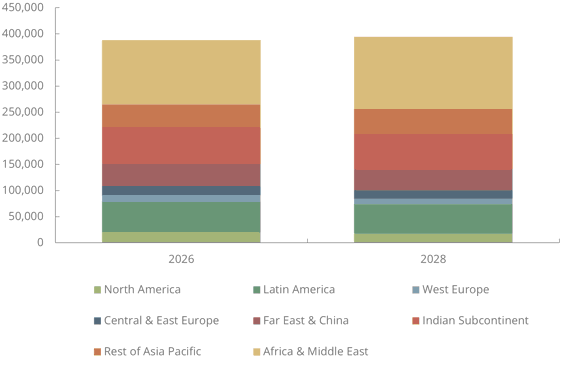
In 2026, fraudulent calls will remain a major threat to the mobile voice channel, with mobile subscribers expected to receive more than 380 billion fraudulent calls in this year. This figure will rise to 394 billion in 2028. In 2025, the market saw a significant increase in vishing attacks, due to fraudsters adopting increasingly sophisticated methods to defraud mobile subscribers and enterprises.
Total Number of Fraudulent Mobile Voice Calls (m), Split by 8 Key Regions, 2026 vs. 2028
Source: Juniper Research
Mobile voice remains a critical channel for both enterprises and consumers, with more than 5 trillion calls expected to be made in 2026. Notably, with the emergence of voice AI technology and voice AI agents, Juniper Research believes it will become increasingly important to secure mobile voice channels, as enterprise voice AI strategies become a key target for fraudsters to mimic using their own AI technology.
AI voice represents a major opportunity for mobile network operators to grow enterprise voice revenue. However, mobile network operators must ensure that voice channels are secure to capitalise on this revenue opportunity. An AI voice agent holds little value to consumers if they are not confident that it is not fraudulent.
Voice firewalls allow mobile network operators to detect and block fraudulent mobile voice calls in real time; eliminating fraud such as robocalls, Wangiri, and Calling Line Identification (CLI) spoofing, and thus protecting the value of their mobile voice channels. In 2026, mobile subscribers will receive more than 270 billion fraudulent spoofed calls; demonstrating the importance of voice firewalls protecting mobile voice as a channel.
How Will Fraudsters Use AI to Grow the Threat of Mobile Voice Fraud in 2026?
The next wave of mobile voice fraud will be defined by fraudsters using AI to create new threats, which mobile network operators must address. In 2026, expanding access to AI tools and services, along with improvements in their quality, will enable fraudsters to leverage generative AI for voice cloning or construct scripts based on enterprises’ customer engagements.
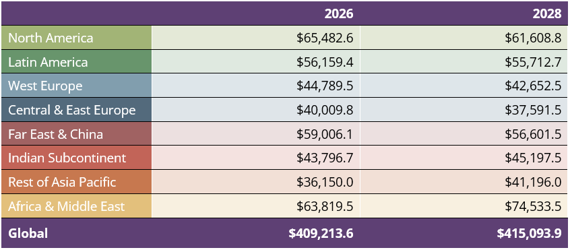
This growing role of AI will make voice fraud increasingly realistic and more difficult for the average mobile subscriber to identify. The probability and size of losses will continue to grow, with Juniper Research forecasting losses from mobile voice fraud to peak at $415 billion in 2028; underscoring the need for mobile network operators to invest in comprehensive voice firewall services that address the increasing complexity of voice fraud threats.
Total Mobile Subscriber Losses to Mobile Voice Fraud ($m), Split by 8 Key Regions, 2026 vs. 2028
Source: Juniper Research
Losses from AI-based voice fraud are mounting, with fraudsters using generative AI to create highly realistic calls, impersonate celebrities, and defraud enterprises. Whilst mobile network operators cannot prevent fraudsters’ access to AI technology, they can address the root causes of AI-based voice fraud by detecting falsified caller IDs, blocking high-volume spoofed calls, and identifying fraud patterns.
Heksagon, a vendor of advanced fraud management and interconnect solutions for telecom operators is at the forefront of combating these threats. They enable mobile network operators to mitigate traditional fraud threats and deliver effective, innovative approaches to preventing modern advanced fraud. The company currently blocks more than 9 million fraudulent voice calls each month, with a false positive rate of just 0.01%.
Heksagon Enables Mobile Network Operators to Fight Next-generation Mobile Voice Fraud
Heksagon was among the first providers worldwide to launch a real-time voice firewall. Heksagon’s experience and expertise in the voice fraud market have established the company as a global leader in voice fraud, with Juniper Research recently awarding it the Platinum Award for Most Innovative Voice Fraud Detection Solution 2026.
The Heksagon Voice Firewall (VFW) solution enables mobile network operators to respond to mobile voice fraud proactively, rather than reactively. It delivers a comprehensive fraud prevention firewall which address both emerging and established fraud scenarios simultaneously including: Wangiri, International Revenue Share Fraud (IRSF), bypass fraud, SIMBox, CLI spoofing, and in the future AI voice social engineering.
The voice firewall enables the mobile network operators to expand their anti-fraud capabilities beyond basic rules-based and batch Call Detail Record (CDR) approaches with real-time enforcement which will protect mobile subscribers and enterprises in the new era of mobile voice fraud. The company already delivers for tier 1 mobile network operators, with more than 9 million calls blocked each month and a 0.01% false positive rate.
Heksagon’s voice firewall also delivers visibility and control over flash call traffic and enables mobile network operators to identify and trace the origin of fraudulent international mobile voice traffic. Furthermore, the Heksagon solution delivers:
- Call Validation: Ensures caller authenticity with regional and end-to-end validation methods; verifying call legitimacy in real time. It combats increasingly sophisticated fraud strategies such as CLI spoofing, robocalls, and SIMBox bypass, with reliable verification for both simple and complex scenarios delivered by an architecture that eliminates single points of failure.
- Call Verification Services for Banks: Enables branded calling which empowers enterprises and banks to protect their communications against high-risk calls, spoofing, and social engineering via a verified caller identity. Heksagon also provides capabilities which can protect customers from vishing and impersonation fraud in real time, with high-risk call alerts which leverage carrier-level visibility to detect and block threats before they reach customers.
Mobile network operators must evolve their anti-fraud capabilities to keep pace with fraudsters growing use of technologies such as AI. Future mobile voice fraud will be highly realistic and difficult to detect, with losses expected to cumulatively exceed $1 trillion from 2026 to 2028. To protect mobile subscribers, enterprises, and the future value of the mobile voice channel, Juniper Research believes that mobile network operators must invest in voice firewalls such as Heksagon’s, which can dynamically detect and block fraudulent calls in real-time.
Heksagon is a software development company specializing in real-time fraud prevention, service monetization, and network intelligence solutions for telecoms and MNOs. Founded in 2007, it operates in 15+ countries, helping operators of all sizes protect their revenue, optimize network performance, and establish effective voice fraud prevention.
With 15+ years of market leadership in voice fraud prevention, call validation, and telecom security, Heksagon drives innovation in fraud prevention and interconnect management. It collaborates with telco partners, offering its Voice Firewall solution under white-label arrangements to support their businesses. Also, it helps operators worldwide create secure and future-ready communication ecosystems.
Latest research, whitepapers & press releases
-
 ReportApril 2026Fintech & Payments
 Nick MaynardAgentic Commerce Market: 2026-2031
Juniper Research’s Agentic Commerce research suite provides an insightful analysis of this rapidly emerging market; enabling stakeholders, including AI developers, payment infrastructure providers, eCommerce marketplaces, merchants and many others, to understand future growth, key trends, and the competitive environment.
VIEW -
 ReportMarch 2026Fintech & Payments
 Michael GreenwoodB2B Payment Cards Market: 2026-2030
Our B2B card payments research suite provides detailed analysis of this rapidly changing market; allowing B2B card providers to gain an understanding of key payment trends and challenges, potential growth opportunities, and the competitive environment.
VIEW -
 ReportMarch 2026Telecoms & Connectivity
 Alex WebbDirect Carrier Billing Market: 2026-2030
Our Direct Carrier Billing research suite for mobile network operators provides detailed analysis and strategic recommendations for the direct carrier billing market over the next four years.
VIEW -
 ReportMarch 2026Fintech & Payments
 Lorien CarterCross-border Payments Market: 2026-2030
Our Cross-border Payments research suite provides a comprehensive and in-depth analysis of the evolving cross-border payments landscape; enabling stakeholders such as businesses, financial institutions, payment service providers, card networks, regulators, and technology infrastructure providers to understand future growth, key trends, and the competitive environment.
VIEW -
 ReportFebruary 2026Telecoms & Connectivity
 Ardit BallhysaMobile Messaging Market: 2026-2030
Juniper Research’s Mobile Messaging research suite provides mobile messaging vendors, mobile network operators, and enterprises with intelligence on how to capitalise on changing market dynamics within the mobile messaging market.
VIEW -
 ReportFebruary 2026Fintech & Payments
 Shane O'SullivanKYC/KYB Systems Market: 2026-2030
Our KYC/KYB Systems research suite provides a detailed and insightful analysis of an evolving market; enabling stakeholders such as financial institutions, eCommerce platforms, regulatory agencies and technology vendors to understand future growth, key trends and the competitive environment.
VIEW


-
 WhitepaperMarch 2026Fintech & Payments
Michael Greenwood
WhitepaperMarch 2026Fintech & Payments
Michael GreenwoodHow B2B Payment Cards Are Streamlining Corporate Expenses
Our complimentary whitepaper, How B2B Payment Cards Are Streamlining Corporate Expenses, examines the state of the B2B payment cards market; considering its impact on different geographies and how it is shaping the modern B2B payments landscape through card controls, payment data analysis tools, and fully integrated spend management solutions.
VIEW -
 WhitepaperMarch 2026Telecoms & Connectivity
Alex Webb
WhitepaperMarch 2026Telecoms & Connectivity
Alex WebbDirect Carrier Billing: Unlocking Emerging Revenue Streams for Operators
Our complimentary whitepaper, Direct Carrier Billing: Unlocking Emerging Revenue Streams for Operators, explores the emerging opportunities for mobile network operators to monetise direct carrier billing.
VIEW -
 WhitepaperMarch 2026Telecoms & Connectivity
 Molly Gatford
MWC 2026: What's Next for Mobile?
Our latest whitepaper distils the most important announcements from MWC Barcelona 2026 and examines what they mean for the telecoms market over the year ahead. From network APIs and 5G monetisation to AI-RAN, direct-to-cell connectivity, and 5G-Advanced, it explains where the biggest opportunities — and challenges — will emerge next.
VIEW -
 WhitepaperMarch 2026Fintech & Payments
Lorien Carter
WhitepaperMarch 2026Fintech & Payments
Lorien CarterThe Transformation of Cross-border Payment Infrastructure
Our complimentary whitepaper, The Transformation of Cross-border Payment Infrastructure, examines the state of the cross-border payments market; explaining the role of key actors in transforming the cross-border payment experience, as well as the current landscape and recent developments within the cross-border payments industry.
VIEW -
 WhitepaperFebruary 2026Telecoms & Connectivity
Ardit Ballhysa
WhitepaperFebruary 2026Telecoms & Connectivity
Ardit BallhysaHow Social Media Will Disrupt Mobile Messaging Channels in 2026
Our complimentary whitepaper, How Social Media Will Disrupt Mobile Messaging Channels in 2026, explores the challenges and opportunities for operators and enterprises as social media traffic continues to increase.
VIEW -
 WhitepaperFebruary 2026Telecoms & Connectivity
 Sam Barker
Protecting Users from Scam Ads: A Call for Social Media Platform Accountability
In this new whitepaper commissioned by Revolut, Juniper Research examines how scam advertising has become embedded across major social media platforms, quantifies the scale of user exposure and financial harm, and explains why current detection and enforcement measures are failing to keep pace.
VIEW


-
Fintech & Payments
B2B Card Payments to Reach $11 Trillion Globally in 2030, Accelerated by Increased Corporate Use
March 2026 -
Telecoms & Connectivity
Direct Carrier Billing to Grow by $35 Billion Globally Over the Next Four Years, as Anti-fraud Capabilities Are Enhanced by Network APIs
March 2026 -
Fintech & Payments
Sophisticated Microfinance Services Spend to Surpass $22 billion By 2030, as Mobile Money Services in Emerging Markets Mature
March 2026 -
Fintech & Payments
Top Three Global Leaders in Cross-border Payment Infrastructure Revealed
March 2026 -
Telecoms & Connectivity
MVNO Subscriber Revenue to Exceed $50 Billion Globally in 2030
March 2026 -
Fintech & Payments
QUBE Events is excited to bring back the 24th NextGen Payments & RegTech Forum - Switzerland
February 2026