The Distillery: World's First Commercially Available 5G Standalone Roaming Connection, and CLARITY Act Failure


In this edition:
- First commercially available 5G Standalone roaming connection: T-Mobile, Reliance Jio, and Syniverse will lay the foundation
- Digital Asset Market Clarity act fails: The CLARITY act is blocked from advancing
- Free travel eSIM: It will be used as a reward for customers by banks
- Marqeta-BVNK partnership: Will stablecoins meet embedded finance?
- New teleport: Orange and Telesat have opened a new satellite gateway
TELECOMMUNICATIONS & CONNECTIVITY
T-Mobile, Reliance Jio, and Syniverse Claim First Commercially Available 5G SA Roaming Connection

On September 21st 2026, T-Mobile and Reliance Jio announced that they had achieved the first commercially available 5G Standalone (SA) roaming connection. Enabled by Syniverse’s connectivity platform, 5G SA roaming is expected to deliver faster speeds, lower latency, and more reliable connections.
Distilled…
🟣 Vodafone, A1 Group, and Ericsson claimed to achieve the world’s first international 5G SA roaming connection between two operator groups in April 2025, but T-Mobile and Reliance Jio’s announcement indicates progress in the actual commercialisation of the technology (although Juniper Research notes that details about the commercialisation are limited at present). 5G SA roaming has long been in mobile network operator roadmaps, but progress commercialising the technology has been limited.
🟣 Juniper Research has found that this is because many mobile network operators have seen a lack of commercial demand from their customers for 5G SA roaming services. The focus of 5G SA roaming monetisation is on enterprise connectivity and services, with the additional capabilities and security offered to roaming connections having the greatest value to enterprise IoT. Although T-Mobile and Reliance Jio’s announcement may signal that enterprise demand for 5G SA roaming is beginning to materialise, Juniper Research is yet to observe substantial interest at this stage.
🟣 In T-Mobile’s press release, Mark Yarkosky, Head International Network, Partnership and Services at Reliance Jio, also highlights the potential for differentiated consumer experiences using 5G SA roaming technology. Retail roaming revenue is projected by Juniper Research to fall by more than 25% over the next five years, and differentiated services for international travellers could provide some revenue uplift to offset this. Juniper Research believes that there are a number of interesting niche revenue opportunities for mobile network operators in the consumer 5G SA roaming space; however the bulk of the revenue opportunity is expected to remain within the enterprise segment.
MORE TELCO INSIGHTS
📡 How Private Cellular Networks Are Unlocking Industry 4.0 [Whitepaper]
📱 The Foldable iPhone Will Be Niche, Very Niche [Blog]
🤖 Beyond the Headlines: What the 'AI Bubble' Really Means [Whitepaper]
FINTECH & PAYMENTS
No Clarity, No Problem: Regulators Move Without Congress

The digital assets industry has experienced significant volatility as of late; a story that never gets old. The turbulence stemmed from the Digital Asset Market Clarity (CLARITY) Act failing to reach a Senate cloture vote on 15th September, 2026, due to ethics language surrounding officials’ cryptocurrency holdings. Whilst the CLARITY Act is not dead, a regulatory vacuum remains for the digital assets industry in addressing the gaps left by the GENIUS Act which passed in 2025.
Two days later, on 17th September 2026, the Securities and Exchange Commission (SEC) issued an order granting temporary, conditional exemptive relief to Tokenised Securities Venues (TSV) from the definition of ‘exchange’ in the Securities Exchange Act of 1934. This allows TSVs to trade tokenised National Market System stock using permissioned automated market makers (AMMs) and liquidity pools. The SEC also temporarily granted a conditional exemption from the definition of ‘dealer’ for liquidity providers in an AMM Liquidity Pool. The relief lasts up to five years; expiring unless the regulatory framework changes in the meantime.
Distilled…
🟣 Trying to find clarity in the CLARITY Act – The Senate blocked the Act from advancing due to Democrats wanting enforceable limits on officials (including President Trump) profiting from cryptocurrency whilst helping write its rules. This comes after Trump’s 2025 disclosure, which showed over $1.4 billion in crypto income. Now, given the upcoming US mid-terms, the current Congress will wind down its session, and a new Congress will be seated at the start of January – pushing any revival of the CLARITY Act into 2027.
🟣 Progression without permission – With the CLARITY Act stalled and unlikely to move again before the mid-term season ends, the SEC and Commodity Futures Trading Commission (CFTC) have both signalled that they will keep advancing crypto market structure administratively, regardless of what Congress does – as evidenced by the SEC’s exemption arriving 48 hours after cloture failed. Similarly, the CFTC’s Chair, Michael Selig, said in late August that the CFTC would use its authority to build a crypto market structure regime if Congress failed to pass CLARITY.
🟣 Permissioned AMMs stand to gain the most – Uniswap, a decentralised, peer-to-peer (P2P) exchange, launched permissioned pools in July 2026, which enables protocol-level enforcement and issuer-managed allowlists. This hardcodes compliance into smart contracts; giving issuers full control over who is approved to trade or hold the asset. Uniswap’s native token, UNI, rose 16% on the SEC exemption news, and has risen a further 12% as of writing, as traders and investors price in a reality where Uniswap may dominate tokenisation volume – being one of the more established protocols in the crypto industry.

TELECOMMUNICATIONS & CONNECTIVITY
Natwest Set to Add Free Travel eSIM for Reward Customers on October 1st 2026
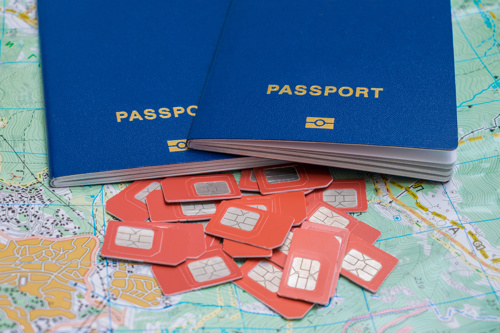
On October 1st 2026, Natwest is adding a global travel eSIM as part of its expanded benefits for customers with a Reward current account; becoming the latest bank to roll out a travel eSIM product for their existing customer bases. Customers with a Reward Silver Account (£10 Monthly Fee) can access one 3GB travel eSIM per year, whilst customers with Reward Platinum Accounts (£22 Monthly Fee) and Premier Reward Black Account (£36 Monthly Fee) can access one 5GB travel eSIM per year.
Distilled…
🟣 Banks are increasingly adding travel eSIM services to their offerings, with both Santander and KB Kookmin Bank (available to select customers for a limited time from 14th August to the 30th of September) adding their own products. With large customer bases and strong customer relationships, Juniper Research believes that banks are well positioned to become important distribution channels for travel eSIMs, especially when integrated with rewards ecosystems that also include the wider travel ecosystem such as travel insurance and lounge access.
🟣 Banks such as Natwest and Santander’s entries into the travel eSIM market are part of a trend where enterprises within the broader travel ecosystem are using platforms provided by Business to Business to Consumer (B2B2C) providers such as ZIM Connections, eSIM Go, and 1Global to quickly launch travel eSIMs. These vendors enable enterprises lacking telecommunications expertise to outsource the complexity associated with launching a travel eSIM; allowing launches in weeks or months.
🟣 Juniper Research believes that enterprises such as banks, airlines, fintechs, retailers, and online travel agencies serving as distribution channels will be pivotal to future market growth; with the travel eSIM revenue projected to reach $8.7 billion in 2030. In particular, integration in travel booking and planning flows will accelerate adoption by international travellers around the world, with competition moving from arrival towards the travel planning and booking process.
FINTECH & PAYMENTS
Inside the Marqeta-BVNK Partnership - Stablecoins Meet Embedded Finance

Recently, Marqeta Inc (NASDAQ: MQ) and BVNK announced a partnership to bring stablecoin-backed card capabilities to both crypto-native and non-crypto companies. Marqeta, the modern card-issuing platform provider, processed nearly $400 billion in annual payments volume during 2025; demonstrating the depth and scale of its offering. BVNK, meanwhile, is the stablecoin payments infrastructure provider behind more than $39 billion in annualised payment volume; helping enterprises move digital dollars globally.
Through the integration, Marqeta’s customers will be able to embed stablecoin capabilities directly into wallets, cards, and everyday financial products. Also, as both the companies are already connected into Mastercard’s network, this gives Marqeta’s customers a path to additional Mastercard capabilities through the same integration. This partnership is a clear example of how embedded finance increasingly scales by linking existing infrastructure rather than creating separate ones.
Distilled…
🟣 Buy, not build: Rather than developing stablecoin capabilities internally, Marqeta is adopting BVNK’s regulated infrastructure to move and manage stablecoins within its platform. This reflects a core embedded finance pattern, where platforms expand their offering by plugging in specialised, ready-made infrastructure instead of building it from scratch; accelerating delivery while leaving compliance and operational standards to the specialist.
🟣 A shared standard: Mastercard, Marqeta and BVNK are all backers of Open USD, a common global standard for stablecoins. A shared foundation across networks, providers and use cases makes it easier for other players to adopt and scale digital dollar payments, rather than each building to a different standard.
🟣 Meeting users where they are: BVNK’s own research found that 77% of surveyed crypto holders would open a stablecoin wallet through their primary bank or fintech app if one were available. This partnership responds directly to that demand; embedding stablecoin access into everyday financial products rather than requiring a separate crypto app.
MORE FINTECH INSIGHTS
📲 How Should Apple Pay Approach India? [Blog]
🏦 Banking Fraud to Reach 2.2 billion Transactions by 2031, Fuelled by Growing AI-enabled Attacks [Research]
💬 Mastercard Brings Chat-to-Pay into WhatsApp: What Comes Next for eCommerce? [Blog]
TELECOMMUNICATIONS & CONNECTIVITY
Orange and Telesat Unveil New Teleport as Telcos Play Down Satellite Threat

Orange and Telesat have opened a new satellite gateway in France, ahead of a planned 2028 launch of services from the European Lightspeed low-Earth orbit (LEO) constellation. The new teleport will be used by Orange to serve its own wholesale and business customers, and by Telesat for its broader consumer offering.
Distilled…
🟣 The Telesat Lightspeed launch will add to services from European counterparts Eutelsat OneWeb, SES, and IRIS, as well as US operators Starlink, ViaSat, Iridium, and Globalstar. LEO satellite providers are increasingly targeting the consumer mobile sector, either in partnership with existing telcos, or as a rival direct-to-device (D2D) proposition.
🟣 US telcos have recently dismissed the threat from satellite to regular mobile connectivity. AT&T CEO John Stankey stated satellite remains merely a solution for connecting the “last 2%” of underserved customers, adding that it could “never match” the experience customers get on a terrestrial network. T-Mobile US CFO Peter Osvaldik also recently claimed satellite is “not a competitive threat”; indicating the lack of spectrum held by the satellite giants.
🟣 In Europe, a report from Bloomberg claims the “big four” operators Deutsche Telekom, Orange, Telefónica, and Vodafone are planning to form a consortium to outbid the satellite players for 2GHz spectrum mobile satellite services (MSS) licences, which are prized for D2D satellite connectivity services. The European Commission is still finalising plans to allocate this spectrum – but if the reports of the consortium are true, it would suggest Europe’s telcos are taking the threat from satellite a little more seriously than their US counterparts.
🟣 The satellite consumer connectivity proposition is still in its infancy. It may not be the future - but the sheer amount of capital being invested (SpaceX has already poured an estimated $10 billion into Starlink) proves that it needs to be taken seriously.
THE LAST DROP
💻 AI Market Develops Doubts, but What Does the Long Term Look Like? [Blog]
🔐 Vibe Coding: The Fastest-growing Threat to Application Security Today [Whitepaper]
Related Research
-
 ReportSeptember 2026Fintech & Payments
 Michael GreenwoodOmnichannel Payment Platform Market, 2026-2031
Our Omnichannel Payment Platform research provides detailed analysis of this rapidly emerging market; allowing omnichannel payment platform providers to gain an understanding of key payment trends and challenges, potential growth opportunities, and the competitive environment.
VIEW -
 ReportSeptember 2026IoT & Emerging Technology
 Nick MaynardIdentity & Access Management Market, 2026-2031
Our Identity & Access Management research suite provides detailed and insightful analysis of this evolving market; enabling stakeholders - from Identity & Access Management platform specialists, cybersecurity vendors, and diversified technology companies - to understand future growth, key trends, and the competitive environment.
VIEW -
 ReportJuly 2026IoT & Emerging Technology
 Saffron DusanjhVLEO Satellite Market, 2026-2031
Our Very Low Earth Orbit (VLEO) Satellite Market research suite provides comprehensive analysis of one of the fastest-emerging markets within the global space economy.
VIEW
Latest research, whitepapers & press releases
-
 ReportSeptember 2026Fintech & Payments
 Dr Manju ChhillarEmbedded Finance Market: 2026-2031
Embedded finance is one of the fastest-growing markets in financial services, and is about to accelerate even further. Our Embedded Finance Market research provides detailed analysis of the key drivers behind this growth, and what these mean for stakeholders in this market.
VIEW -
 ReportSeptember 2026IoT & Emerging Technology
 Thomas WilsonApplication Security Market: 2026-2031
Our Application Security research suite provides detailed analysis of this emerging market; allowing application security providers to gain an understanding of key security trends and challenges, potential growth opportunities, and the competitive environment.
VIEW -
 ReportSeptember 2026Fintech & Payments
 Shane O'SullivanBanking Fraud Prevention Market: 2026-2031
Our Banking Fraud Prevention research suite provides a comprehensive and in-depth analysis of the types of fraud currently impacting the banking sector, and the evolving methods that can be used to overcome them.
VIEW -
 ReportSeptember 2026Telecoms & Connectivity
 Nick MaynardPrivate LTE & 5G Networks Market: 2026-2031
Our Private LTE & 5G Networks research suite provides detailed and insightful analysis of this evolving market; enabling stakeholders - from private LTE & 5G network platform specialists, mobile network operators, and diversified technology companies - to understand future growth, key trends, and the competitive environment.
VIEW -
 ReportSeptember 2026Fintech & Payments
 Michael GreenwoodOmnichannel Payment Platform Market: 2026-2031
Our Omnichannel Payment Platform research provides detailed analysis of this rapidly emerging market; allowing omnichannel payment platform providers to gain an understanding of key payment trends and challenges, potential growth opportunities, and the competitive environment.
VIEW -
 ReportSeptember 2026IoT & Emerging Technology
Nick MaynardIdentity & Access Management Market: 2026-2031
ReportSeptember 2026IoT & Emerging Technology
Nick MaynardIdentity & Access Management Market: 2026-2031Our Identity & Access Management research suite provides detailed and insightful analysis of this evolving market; enabling stakeholders - from Identity & Access Management platform specialists, cybersecurity vendors, and diversified technology companies - to understand future growth, key trends, and the competitive environment.
VIEW


-
 WhitepaperSeptember 2026IoT & Emerging Technology
Thomas Wilson
WhitepaperSeptember 2026IoT & Emerging Technology
Thomas WilsonVibe Coding: The Fastest-growing Threat to Application Security Today
Our complimentary whitepaper, Vibe Coding: The Fastest-growing Threat to Application Security Today, examines the state of the application security market; considering its impact on different verticals, and how it is being employed in these verticals to best combat malicious attackers and keep sensitive data safe.
VIEW -
 WhitepaperSeptember 2026Fintech & Payments
Shane O'Sullivan
WhitepaperSeptember 2026Fintech & Payments
Shane O'SullivanThe Fraud Frontier: Securing Banking in an AI-driven Era
Our complimentary whitepaper, The Fraud Frontier: Securing Banking in an AI-driven Era, examines the rapidly evolving state of the banking fraud prevention market.
VIEW -
 WhitepaperSeptember 2026Telecoms & Connectivity
Nick Maynard
WhitepaperSeptember 2026Telecoms & Connectivity
Nick MaynardHow Private Cellular Networks Are Unlocking Industry 4.0
Our complimentary whitepaper, How Private Cellular Networks Are Unlocking Industry 4.0, examines how private LTE & 5G networks are reshaping the way industry works.
VIEW -
 WhitepaperSeptember 2026Fintech & Payments
Michael Greenwood
WhitepaperSeptember 2026Fintech & Payments
Michael GreenwoodHow Omnichannel Payment Platforms Are Streamlining Merchant Operations
Our complimentary whitepaper, How Omnichannel Payment Platforms Are Streamlining Merchant Operations, examines how merchants are utilising omnichannel payment platforms to capitalise on customer data and integration with other business management software in order to minimise inefficiency.
VIEW -
 WhitepaperSeptember 2026Telecoms & Connectivity
 Jawad Jahan
Beyond the Headlines: What the 'AI Bubble' Really Means
Our complimentary whitepaper, Beyond the Headlines – What the 'AI Bubble' Really Means, analyses the scale and structure of AI infrastructure investment in the West, and the channels through which it could transmit stress to the wider financial system.
VIEW -
 WhitepaperSeptember 2026IoT & Emerging Technology
Nick Maynard
WhitepaperSeptember 2026IoT & Emerging Technology
Nick MaynardNon-human Identities ~ Transforming Identity & Access Management
Our complimentary whitepaper, Non-human Identities ~ Transforming Identity & Access Management, examines how non-human identities are revolutionising the Identity & Access Management market.
VIEW


-
Fintech & Payments
Embedded Finance Revenue to Reach $617 Billion Globally by 2031, as B2B Revenue Surges 390%
September 2026 -
IoT & Emerging Technology
AppSec Enterprise Spend to Approach $13 Billion Globally by 2031, as Market Leaders Revealed in New Competitor Leaderboard
September 2026 -
Fintech & Payments
Banking Fraud to Reach 2.2 billion Transactions by 2031, Fuelled by Growing AI-enabled Attacks
September 2026 -
Telecoms & Connectivity
Private Network Spend to Exceed $84 Billion Globally by 2031, as Market Leaders Set to Capitalise
September 2026 -
Fintech & Payments
The 6th Financial Innovation Forum – Payments & RegTech Arrives in London
September 2026 -
Fintech & Payments
Omnichannel Payment Platform Revenue to Exceed $100 Billion Globally by 2031, as Leading Platforms Set to Capitalise Are Revealed
September 2026