The Distillery: Neobanks Clash in the US & Oil Shocks Boost EV Interest


In this edition:
- Monzo’s US exit and Revolut’s licence bid highlight the risks and rewards of entering the US neobank market.
- Oil market disruption is driving renewed EV interest, but key barriers to adoption remain.
- Physical AI is hitting an inflection point, thanks to key advances in compute, simulation, and AI models.
FINTECH & PAYMENTS
Monzo Closes US Operations as Revolut Files for Banking Licence

In March 2026, UK-based neobank Revolut announced that it has applied for a US national bank charter, alongside plans to expand into the American market.
This move comes as Monzo confirmed it will close all US customer accounts by June 2026, just six years after entering the market. The decision reflects persistent challenges around customer acquisition costs and limited traction, which mirrors the earlier withdrawal of N26 from the US in 2021; highlighting the structural difficulty of breaking into this market.
Distilled…
🟣 The failure of the partnership model continues to undermine neobank expansion in the US. Monzo’s reliance on a sponsor bank limited its control over infrastructure and increased operational costs; an issue that is particularly acute for digital banks operating on thinner margins. Without direct ownership of the banking stack, scaling efficiently becomes significantly more difficult.
🟣 Regulatory conditions in the US may be shifting in Revolut’s favour. Historically, fragmented state-level licensing and compliance requirements have acted as a major barrier to entry. A more fintech-friendly regulatory environment could reduce this complexity; making it easier for international players to establish a foothold and scale more efficiently.
🟣 Revolut’s long-term ambition to become a global financial super-app strengthens its US expansion case. The platform already integrates services spanning foreign exchange, crypto trading, and investments; positioning it beyond a traditional neobank. Combined with recent international moves, including its acquisition of Banco Cetelem in Argentina, Revolut is clearly attempting to extend its cross-border reach; though execution across multiple markets will be key to delivering on this strategy.
MORE PAYMENTS INSIGHTS
💳 B2B Card Payments to Reach $11 Trillion Globally in 2030 [New Research]
🦾 Agentic Commerce - Revolution or False Dawn? [Whitepaper]
💳 How B2B Payment Cards Are Streamlining Corporate Expenses [Whitepaper]
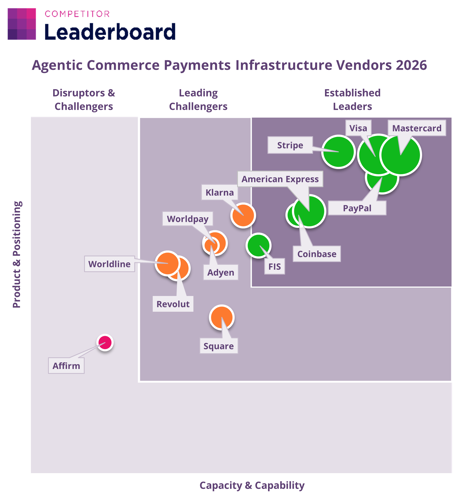
🦾 Agentic Commerce Set to Generate $1.5 Trillion Globally by 2030, as Payments Infrastructure Leaders Revealed [New Research]
SMART CITIES & SUSTAINABILITY
Strait of Hormuz Disruption Drives Electric Vehicle Surge

The war in Iran and the disruption of the Strait of Hormuz — a route responsible for around 20% of global oil flows — has sent energy markets into shock; with prices surging and supply chains under strain.
This comes at a difficult moment for electric vehicles (EVs), where adoption has fallen short of expectations and manufacturers have begun scaling back targets. Rising fuel costs may now provide a tailwind for EV demand, but structural barriers — including cost, infrastructure, and charging access — remain firmly in place.
Distilled…
🟣 EV adoption still depends heavily on government support. The removal of tax credits in the US has weighed on the market, while mixed messaging in countries such as the UK has done little to strengthen confidence. Infrastructure rollout also remains reliant on public backing, particularly for large-scale charging networks. Although oil supply disruption may drive increased support for electrification and renewables, there is limited evidence of this in the US, with Europe better positioned to lead. Ultimately, limited access to home charging means governments must prioritise making charging easier at home or within local areas.
🟣 Consumer interest in EVs is rising in response to the crisis. Data from Edmunds shows EVs accounting for a greater share of overall vehicle research activity following the beginning of the war, while in Australia, EVs doubled their share of new vehicle registrations year-on-year in March 2026. In the UK, leasing demand tracked by Octopus Energy has also increased by 36%. These indicators point to a clear shift in consumer appetite, with interest strengthening even if adoption has yet to fully follow.
🟣 Technological and market improvements are gradually strengthening the EV proposition. New models such as the BMW iX3 are extending range, while BYD continues to push faster charging capabilities. At the same time, lower-cost models including the Renault 5 and Nissan Leaf are improving affordability. Depreciation is also driving a more accessible used market, further supporting demand. Progress is clear, but mass adoption will depend on how quickly these gains translate into lower costs and greater convenience.
IOT & EMERGING TECHNOLOGY
Physical AI Is Moving into the Real World — Here’s What’s Changed

As the US marks National Robotics Week, it’s clear that physical AI is hitting an inflection point. What has largely been confined to pilots and demos is now starting to translate into real-world deployment.
Ahead of our upcoming Physical AI in Manufacturing & Logistics research, out next Monday, our early findings show more than 400,000 physical AI systems will be deployed across manufacturing and logistics by 2030 — a 3,500% increase from 2026. So what’s changed to make this level of deployment possible?
🟣 Advances in edge AI and on-device compute are enabling physical AI systems to process sensory data in real time; supporting faster and more autonomous decision-making on the factory floor. This is critical in environments where systems must operate safely alongside humans, with reduced latency improving both responsiveness and reliability. As a result, physical AI is becoming viable for time-sensitive industrial applications that were previously out of reach.
🟣 Improvements in simulation environments and synthetic data generation are making it easier to train models that perform consistently in real-world conditions. Historically, translating simulated training into reliable performance has been a key barrier. This is now being addressed, enabling more effective pre-deployment testing, as well as ongoing optimisation through predictive maintenance and performance modelling.
🟣 Emerging vision-language-action models are combining visual, linguistic, and tactile inputs; giving physical AI systems a more complete understanding of their environment. By incorporating a sense of touch alongside vision and reasoning, these systems are becoming significantly more capable in tasks requiring precision, adaptability, and interaction with physical objects — unlocking more complex use cases across manufacturing and logistics.
Latest research, whitepapers & press releases
-
 ReportOctober 2026Fintech & Payments
 Jawad JahanCrypto-gaming Market: 2026-2035
Our Crypto-gaming Market research suite provides an insightful analysis of this rapidly growing market; enabling stakeholders - from crypto-gaming and sportsbooks operators, prediction market platforms, business-to-business (B2B) gambling platforms and software providers, to crypto payment processors and regulators - to understand future growth, key trends, and the competitive environment.
VIEW -
 ReportOctober 2026Telecoms & Connectivity
 Alex WebbRetail Roaming Market: 2026-2031
Our Retail Roaming research suite for mobile network operators (MNOs) and mobile virtual network operators (MVNOs) provides detailed analysis and strategic recommendations for the next era of retail roaming.
VIEW -
 ReportSeptember 2026Fintech & Payments
 Dr Manju ChhillarEmbedded Finance Market: 2026-2031
Embedded finance is one of the fastest-growing markets in financial services, and is about to accelerate even further. Our Embedded Finance Market research provides detailed analysis of the key drivers behind this growth, and what these mean for stakeholders in this market.
VIEW -
 ReportSeptember 2026IoT & Emerging Technology
 Thomas WilsonApplication Security Market: 2026-2031
Our Application Security research suite provides detailed analysis of this emerging market; allowing application security providers to gain an understanding of key security trends and challenges, potential growth opportunities, and the competitive environment.
VIEW -
 ReportSeptember 2026Fintech & Payments
 Shane O'SullivanBanking Fraud Prevention Market: 2026-2031
Our Banking Fraud Prevention research suite provides a comprehensive and in-depth analysis of the types of fraud currently impacting the banking sector, and the evolving methods that can be used to overcome them.
VIEW -
 ReportSeptember 2026Telecoms & Connectivity
 Nick MaynardPrivate LTE & 5G Networks Market: 2026-2031
Our Private LTE & 5G Networks research suite provides detailed and insightful analysis of this evolving market; enabling stakeholders - from private LTE & 5G network platform specialists, mobile network operators, and diversified technology companies - to understand future growth, key trends, and the competitive environment.
VIEW


-
 WhitepaperOctober 2026Telecoms & Connectivity
Alex Webb
WhitepaperOctober 2026Telecoms & Connectivity
Alex WebbReimagining the Future of Retail Roaming – How Mobile Network Operators Must Adapt
Our complimentary whitepaper, Reimagining the Future of Retail Roaming – How Mobile Network Operators Must Adapt, explores the emerging opportunities for MNOs within retail roaming.
VIEW -
 WhitepaperSeptember 2026Fintech & Payments
Dr Manju Chhillar
WhitepaperSeptember 2026Fintech & Payments
Dr Manju ChhillarEmerging Markets: The Next Opportunity for Embedded Finance
This free whitepaper examines how a combination of multiple factors is driving North America towards saturation for embedded finance.
VIEW -
 WhitepaperSeptember 2026IoT & Emerging Technology
Thomas Wilson
WhitepaperSeptember 2026IoT & Emerging Technology
Thomas WilsonVibe Coding: The Fastest-growing Threat to Application Security Today
Our complimentary whitepaper, Vibe Coding: The Fastest-growing Threat to Application Security Today, examines the state of the application security market; considering its impact on different verticals, and how it is being employed in these verticals to best combat malicious attackers and keep sensitive data safe.
VIEW -
 WhitepaperSeptember 2026Fintech & Payments
Shane O'Sullivan
WhitepaperSeptember 2026Fintech & Payments
Shane O'SullivanThe Fraud Frontier: Securing Banking in an AI-driven Era
Our complimentary whitepaper, The Fraud Frontier: Securing Banking in an AI-driven Era, examines the rapidly evolving state of the banking fraud prevention market.
VIEW -
 WhitepaperSeptember 2026Telecoms & Connectivity
Nick Maynard
WhitepaperSeptember 2026Telecoms & Connectivity
Nick MaynardHow Private Cellular Networks Are Unlocking Industry 4.0
Our complimentary whitepaper, How Private Cellular Networks Are Unlocking Industry 4.0, examines how private LTE & 5G networks are reshaping the way industry works.
VIEW -
 WhitepaperSeptember 2026Fintech & Payments
 Michael Greenwood
How Omnichannel Payment Platforms Are Streamlining Merchant Operations
Our complimentary whitepaper, How Omnichannel Payment Platforms Are Streamlining Merchant Operations, examines how merchants are utilising omnichannel payment platforms to capitalise on customer data and integration with other business management software in order to minimise inefficiency.
VIEW


-
Fintech & Payments
Juniper Research Unveils Identity & Security Award Winners for 2026
October 2026 -
Retail Roaming Revenue to Fall $4 Billion By 2031, as Regulatory Restrictions and Competition Bite
October 2026 -
Fintech & Payments
Soft POS to Surpass 100 Million Installations in 2030
September 2026 -
Fintech & Payments
The NextGen Payments & RegTech Forum Arrives in Dubai
September 2026 -
Fintech & Payments
The Global Trade Finance Expo Arrives in Dubai, UAE
September 2026 -
Fintech & Payments
The Vision Forex Forum Arrives in Dubai, UAE
September 2026