The Distillery #21: eBay Draws the Line on AI Agents & Europe Builds Satellite Sovereignty


In this edition:
- Europe takes its first steps towards satellite sovereignty, as GOVSATCOM launches and IRIS² slips into 2029.
- eBay moves to block third-party AI shopping bots, as AI-driven interactions scale rapidly.
- Post-quantum security isn't just a probem for future you, so here's what you need to know.
- Our latest insights on eSIM, fraud and security, modern card issuing, and the global memory crisis.
TELECOMS & CONNECTIVITY
Europe Starts Building Its Own Satellite Backbone
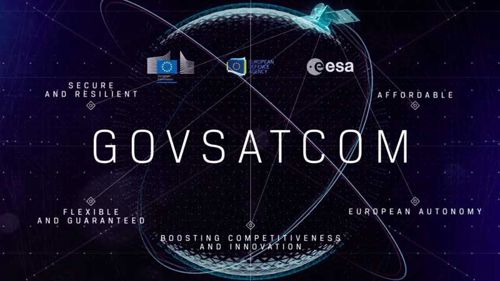
The EU has launched GOVSATCOM, a secure satellite communications programme for government and military use, as part of a broader push for greater autonomy in space and satellite networks. Framed as a first step toward sovereign connectivity, the announcement also confirmed that IRIS² — the EU’s planned 290-satellite, multi-orbit constellation — is now expected to enter service in 2029.
The move comes against a backdrop of long-standing reliance on non-European satellite services, including Starlink. Proposed increases in EU space and defence funding of up to €131 billion between 2028 and 2034 suggest a growing focus on reducing that dependence through domestically controlled infrastructure.
Distilled…
🟣 Satellite sovereignty is taking shape. GOVSATCOM establishes a guaranteed, state-controlled layer for EU governments, while IRIS² is intended to extend that capability at scale later this decade. Our latest figures have Europe putting more than 1,400 satellites in orbit by the end of this year, from from 1,200 in 2025; strengthening the case for sovereign control.
🟣 Supplier nationality is beginning to shape procurement. The SkyNet 6 shootout between Lockheed Martin and Airbus has raised concerns over reliance on a US supplier for UK military satellite communications, as well as the potential impact on defence exports. Governments are now weighing who controls satellite systems and where they are built, not just how well they perform.
🟣 Similar sovereignty-driven decoupling is occuring elsewhere, particularly with regards to public sector technology. France’s move to replace platforms such as Microsoft Teams and Zoom with its domestic Visio service, alongside continued investment in sovereign AI models, illustrates how control over critical digital infrastructure is increasingly being treated as a policy priority.
FINTECH & PAYMENTS
eBay Moves to Block Third-party AI Shopping Agents

eBay is preparing to block third-party "buy-for-me" AI agents and automated shopping bots from interacting with its platform without explicit permission.
The move follows an update to eBay’s terms of service that prohibits automated tools — including LLM-driven bots and end-to-end purchasing flows — from placing orders without human review. It comes as agentic commerce begins to scale rapidly: we estimate that AI agents will automate over 34 billion customer interactions by 2027, up just from 3.3 billion in 2025.
The shift mirrors a broader clampdown across major marketplaces, after Amazon restricted third-party AI shopping tools and pursued legal action against Perplexity over an AI browser agent capable of making purchases on a user’s behalf.
Distilled…
🟣 Marketplaces are defending control of the customer journey. Third-party AI agents sit between platforms and buyers, thereby weakening the direct relationship that marketplaces like Amazon and eBay have spent years building. If discovery and purchasing shift to external agents, marketplaces risk becoming interchangeable fulfilment layers rather than the destination where shopping begins.
🟣 Agentic commerce introduces hard-to-solve fraud trade-offs. AI agents blur the line between legitimate automation and account takeover. Behavioural biometrics struggle to distinguish a user delegating access from a compromised account, creating a dilemma: block AI agents and frustrate customers, or allow them and expand the fraud surface. From a risk perspective, blanket restrictions are the simplest containment strategy.
🟣 Blocking third-party agents clears the path for first-party AI. Despite public resistance to external agents, marketplaces are actively developing their own. An in-house AI agent offers many of the same convenience benefits while keeping users, data, and transactions inside the platform. In that context, restricting third-party access looks less like hostility to AI, and more like preparation for platform-controlled agentic commerce.
IOT & EMERGING TECHNOLOGY
So You Think Quantum is a Future Problem?

Despite the hype, quantum computing still feels like an abstract concept. Q-Day — the point at which quantum computers can break today’s cryptography — has no fixed date, so most organisations aren’t under immediate pressure to replace existing systems.
However, the real risk isn’t the moment quantum computers break encryption. Sensitive data is already being harvested and stored today; creating exposure to future quantum-enabled decryption.
So to coincide with our new post-quantum cryptography research, we’re looking at what organisations tend to get wrong when they treat quantum as a distant concern.
🟣 Waiting for Q-Day costs time, not risk. Uncertainty around when quantum computers reach a breaking point has slowed action, but encrypted data can be compromised long before then. For sectors that retain data for years — finance, government, telecoms — delay increases exposure rather than reducing it.
🟣 Standards and regulation will set the pace. Most organisations won’t adopt post-quantum cryptography because of a sudden technical breakthrough, but because compliance demands it. NIST, ETSI, and national bodies are already setting requirements, making early alignment safer than waiting.
🟣 Post-quantum migration isn’t a single switch. Cryptography is embedded across networks, certificates, hardware, and protocols. Hybrid approaches exist precisely because wholesale replacement is disruptive, so early progress depends on mapping dependencies rather than chasing algorithm purity.
🟣 Most organisations won’t deploy PQC directly. Adoption is likely to come via cloud services, APIs, HSMs, and embedded platforms rather than in-house cryptographic builds. The market is forming around integration and transition support, not raw algorithms.
ICYMI
The Last Drop
We can’t fit all our work from the last fortnight in one issue, so here’s a hand-picked selection of blogs, infographics, and insights that deserve your attention.
🧠 As AI drives down the world's supply of RAM, rising memory costs mean everything from laptops to dishwashers is about to get a lot more expensive.
🏆 We just announced the winners of the 2026 Future Digital Awards for Telco Innovation; featuring companies such as Cellusys, Sinch, Zumigo, and TNS.
📶 eSIM connections are set to reach 1.5 billion globally this year; highlighting how what started as a premium smartphone feature is now becoming a default for operators, OEMs, and travellers.
👁️ Civic identity apps, tokenisation, and AI will be the most impactful fraud and security technologies of the next 12 months, says our latest Tech Horizon.
💳 Modern card issuing platforms are set to issue 1.6 billion payment cards in 2030 alone, as banks shift focus from UX experimentation to cost and operational efficiency.
Latest research, whitepapers & press releases
-
 ReportOctober 2026Fintech & Payments
 Jawad JahanCrypto-gaming Market: 2026-2035
Our Crypto-gaming Market research suite provides an insightful analysis of this rapidly growing market; enabling stakeholders - from crypto-gaming and sportsbooks operators, prediction market platforms, business-to-business (B2B) gambling platforms and software providers, to crypto payment processors and regulators - to understand future growth, key trends, and the competitive environment.
VIEW -
 ReportOctober 2026Telecoms & Connectivity
 Alex WebbRetail Roaming Market: 2026-2031
Our Retail Roaming research suite for mobile network operators (MNOs) and mobile virtual network operators (MVNOs) provides detailed analysis and strategic recommendations for the next era of retail roaming.
VIEW -
 ReportSeptember 2026Fintech & Payments
 Dr Manju ChhillarEmbedded Finance Market: 2026-2031
Embedded finance is one of the fastest-growing markets in financial services, and is about to accelerate even further. Our Embedded Finance Market research provides detailed analysis of the key drivers behind this growth, and what these mean for stakeholders in this market.
VIEW -
 ReportSeptember 2026IoT & Emerging Technology
 Thomas WilsonApplication Security Market: 2026-2031
Our Application Security research suite provides detailed analysis of this emerging market; allowing application security providers to gain an understanding of key security trends and challenges, potential growth opportunities, and the competitive environment.
VIEW -
 ReportSeptember 2026Fintech & Payments
 Shane O'SullivanBanking Fraud Prevention Market: 2026-2031
Our Banking Fraud Prevention research suite provides a comprehensive and in-depth analysis of the types of fraud currently impacting the banking sector, and the evolving methods that can be used to overcome them.
VIEW -
 ReportSeptember 2026Telecoms & Connectivity
 Nick MaynardPrivate LTE & 5G Networks Market: 2026-2031
Our Private LTE & 5G Networks research suite provides detailed and insightful analysis of this evolving market; enabling stakeholders - from private LTE & 5G network platform specialists, mobile network operators, and diversified technology companies - to understand future growth, key trends, and the competitive environment.
VIEW


-
 WhitepaperOctober 2026Telecoms & Connectivity
Alex Webb
WhitepaperOctober 2026Telecoms & Connectivity
Alex WebbReimagining the Future of Retail Roaming – How Mobile Network Operators Must Adapt
Our complimentary whitepaper, Reimagining the Future of Retail Roaming – How Mobile Network Operators Must Adapt, explores the emerging opportunities for MNOs within retail roaming.
VIEW -
 WhitepaperSeptember 2026Fintech & Payments
Dr Manju Chhillar
WhitepaperSeptember 2026Fintech & Payments
Dr Manju ChhillarEmerging Markets: The Next Opportunity for Embedded Finance
This free whitepaper examines how a combination of multiple factors is driving North America towards saturation for embedded finance.
VIEW -
 WhitepaperSeptember 2026IoT & Emerging Technology
Thomas Wilson
WhitepaperSeptember 2026IoT & Emerging Technology
Thomas WilsonVibe Coding: The Fastest-growing Threat to Application Security Today
Our complimentary whitepaper, Vibe Coding: The Fastest-growing Threat to Application Security Today, examines the state of the application security market; considering its impact on different verticals, and how it is being employed in these verticals to best combat malicious attackers and keep sensitive data safe.
VIEW -
 WhitepaperSeptember 2026Fintech & Payments
Shane O'Sullivan
WhitepaperSeptember 2026Fintech & Payments
Shane O'SullivanThe Fraud Frontier: Securing Banking in an AI-driven Era
Our complimentary whitepaper, The Fraud Frontier: Securing Banking in an AI-driven Era, examines the rapidly evolving state of the banking fraud prevention market.
VIEW -
 WhitepaperSeptember 2026Telecoms & Connectivity
Nick Maynard
WhitepaperSeptember 2026Telecoms & Connectivity
Nick MaynardHow Private Cellular Networks Are Unlocking Industry 4.0
Our complimentary whitepaper, How Private Cellular Networks Are Unlocking Industry 4.0, examines how private LTE & 5G networks are reshaping the way industry works.
VIEW -
 WhitepaperSeptember 2026Fintech & Payments
 Michael Greenwood
How Omnichannel Payment Platforms Are Streamlining Merchant Operations
Our complimentary whitepaper, How Omnichannel Payment Platforms Are Streamlining Merchant Operations, examines how merchants are utilising omnichannel payment platforms to capitalise on customer data and integration with other business management software in order to minimise inefficiency.
VIEW


-
Retail Roaming Revenue to Fall $4 Billion By 2031, as Regulatory Restrictions and Competition Bite
October 2026 -
Fintech & Payments
Soft POS to Surpass 100 Million Installations in 2030
September 2026 -
Fintech & Payments
The NextGen Payments & RegTech Forum Arrives in Dubai
September 2026 -
Fintech & Payments
The Global Trade Finance Expo Arrives in Dubai, UAE
September 2026 -
Fintech & Payments
The Vision Forex Forum Arrives in Dubai, UAE
September 2026 -
Fintech & Payments
Embedded Finance Revenue to Reach $617 Billion Globally by 2031, as B2B Revenue Surges 390%
September 2026