SpaceX Isn't Coming to Compete With Your Mobile Carrier - For Now, At Least

SpaceX’s recent acquisition of EchoStar’s AWS-4 and H-block spectrum for $17 billion marks one of the most consequential developments in the US telecom sector this year. The deal transfers mid-band spectrum, initially intended for terrestrial mobile deployment, into the hands of a satellite operator that has aggressively advanced direct-to-device (D2D) satellite services.
Combined with SpaceX’s ongoing deployment of second-generation Starlink satellites, and its earlier Federal Communications Commission (FCC) authorisations for supplemental coverage from space in partnership with T-Mobile, this transaction represents more than just opportunistic spectrum buying. It could potentially be a deliberate step toward redefining the competitive landscape of US mobile connectivity.
The question is whether SpaceX has the capacity, both technically and commercially, to become a de facto fourth national mobile operator alongside AT&T, Verizon, and T-Mobile. In short, the answer is no – at least for now.
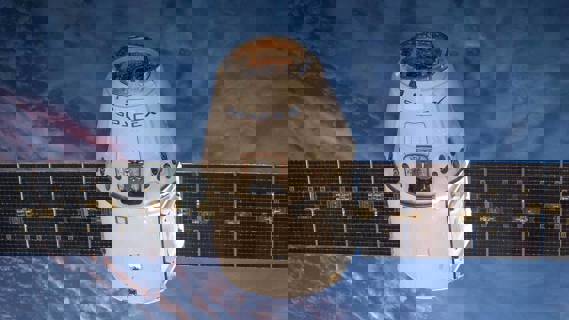
Source: SpaceX
From a regulatory perspective, SpaceX is operating in increasingly favourable conditions. The FCC had been scrutinising EchoStar for failing to make efficient use of the AWS-4 spectrum, with SpaceX itself filing complaints about spectrum ‘warehousing’. By acquiring the licences, SpaceX has not only neutralised a potential competitor but also shifted regulatory momentum in its favour. The FCC closed its investigation into EchoStar’s spectrum performance obligations following the sale; effectively validating SpaceX’s right to leverage these assets for D2D satellite services. Furthermore, the FCC’s evolving ‘supplemental coverage from space’ framework demonstrates a willingness to blur the traditional boundaries between terrestrial and non-terrestrial networks. For SpaceX, this creates a policy environment in which spectrum assets originally allocated for ground-based 5G can be repurposed to advance satellite-based alternatives.
Technically, this move gives SpaceX an asset that strengthens its direct-to-cell roadmap. The AWS-4 and H-block spectrum, centred around the 2 GHz band, is well-suited for hybrid mobile-satellite use. SpaceX has already launched over 600 Starlink satellites capable of supporting D2D links, with the next generation of satellites scheduled for deployment in 2026 and 2027. The combination of exclusive spectrum rights and an expanding constellation positions SpaceX to address one of the largest constraints on D2D systems: predictable, interference-free access to frequencies that can connect with mass-market handsets.
Yet, despite these favourable developments, several structural challenges prevent SpaceX from replicating the role of a terrestrial mobile operator in the near-term. The first and most substantial issue is propagation and penetration. Satellite signals, even at 2 GHz, weaken significantly when passing through walls, windows, and urban environments. While terrestrial operators mitigate these issues with dense deployments of mid-band and low-band sites, indoor small cells, and Distributed Antenna Systems, satellites cannot replicate this level of mitigation from orbit. Consequently, D2D services are best-positioned as a coverage solution for outdoor, rural, and underserved areas, rather than a full substitute for urban mobile coverage.
A second constraint lies in spectral efficiency and capacity. Terrestrial 5G networks operating in mid-band spectrum can achieve far higher bits-per-hertz efficiency than non-terrestrial D2D systems. Because Starlink satellites are positioned hundreds of kilometres above Earth, their signals lose strength over long distances, and each satellite must cover a broad area with its beams. This means the number of users a single satellite can support at the same time is limited. While newer Starlink satellites are improving, with better beamforming and stronger power, the amount of bandwidth available to each user will still fall short of that which dense terrestrial 5G networks can deliver through small cells. As a result, there is a natural cap on how much of the consumer market SpaceX can realistically serve, especially in places where data demand is high.
The economics of satellite capacity further reinforce these constraints. While SpaceX has driven launch costs down through reusable rockets, maintaining a constellation of thousands of satellites remains capital-intensive. Layering on a $17 billion spectrum purchase, plus ongoing launch and maintenance costs, means that SpaceX will need to monetise these assets aggressively. The challenge is that US consumers are accustomed to paying terrestrial rates for mobile services, which benefit from decades of infrastructure ROI.
Device support is another hurdle. Elon Musk himself has acknowledged that smartphones compatible with AWS-4 and H-block spectrum for D2D will not be widely available for at least two years. This lag in compatible handset delays the potential for large-scale adoption. Without major chipset vendors and OEMs prioritising support for these bands, SpaceX’s addressable market remains constrained, particularly in the premium smartphone segment where 5G adoption is already high.
From a competitive standpoint, incumbent operators are unlikely to concede ground. Verizon, AT&T, and T-Mobile hold extensive low-, mid-, and high-band spectrum portfolios and continue to densify their 5G networks with fibre-backed small cells. They are also exploring their own non-terrestrial partnerships and supplemental coverage models; ensuring that satellite connectivity does not become an uncontested differentiator.
As such, SpaceX will not become the fourth US mobile operator – at least not anytime soon. Instead, the more probable trajectory is that SpaceX evolves into a hybrid connectivity provider, offering supplemental coverage in rural areas, redundancy in disaster recovery, and bundled services that integrate satellite with existing mobile and broadband offerings. This model does not displace incumbents, but, rather, adds competitive pressure and expands service reach, particularly in geographies where terrestrial networks remain uneconomical.
For now, the acquisition of EchoStar’s spectrum is best understood as a long-term strategic positioning play. It signals SpaceX’s intent to insert itself deeper into the US mobile value chain, but the technical and commercial barriers prevent direct competition with terrestrial operators.
Ardit works within the Telecoms & Connectivity team; providing insights and strategic recommendations on current and future markets within the telecoms industry. His primary area of focus is on operator and CSP strategies. He previously worked at GlobalData for four years where he covered the technology and telecommunications industries, and prior to that, worked at Gartner for two years.
Latest research, whitepapers & press releases
-
 ReportOctober 2026Fintech & Payments
 Jawad JahanCrypto-gaming Market: 2026-2035
Our Crypto-gaming Market research suite provides an insightful analysis of this rapidly growing market; enabling stakeholders - from crypto-gaming and sportsbooks operators, prediction market platforms, business-to-business (B2B) gambling platforms and software providers, to crypto payment processors and regulators - to understand future growth, key trends, and the competitive environment.
VIEW -
 ReportOctober 2026Telecoms & Connectivity
 Alex WebbRetail Roaming Market: 2026-2031
Our Retail Roaming research suite for mobile network operators (MNOs) and mobile virtual network operators (MVNOs) provides detailed analysis and strategic recommendations for the next era of retail roaming.
VIEW -
 ReportSeptember 2026Fintech & Payments
 Dr Manju ChhillarEmbedded Finance Market: 2026-2031
Embedded finance is one of the fastest-growing markets in financial services, and is about to accelerate even further. Our Embedded Finance Market research provides detailed analysis of the key drivers behind this growth, and what these mean for stakeholders in this market.
VIEW -
 ReportSeptember 2026Identity & Security
 Thomas WilsonApplication Security Market: 2026-2031
Our Application Security research suite provides detailed analysis of this emerging market; allowing application security providers to gain an understanding of key security trends and challenges, potential growth opportunities, and the competitive environment.
VIEW -
 ReportSeptember 2026Fintech & Payments
 Shane O'SullivanBanking Fraud Prevention Market: 2026-2031
Our Banking Fraud Prevention research suite provides a comprehensive and in-depth analysis of the types of fraud currently impacting the banking sector, and the evolving methods that can be used to overcome them.
VIEW -
 ReportSeptember 2026Telecoms & Connectivity
 Nick MaynardPrivate LTE & 5G Networks Market: 2026-2031
Our Private LTE & 5G Networks research suite provides detailed and insightful analysis of this evolving market; enabling stakeholders - from private LTE & 5G network platform specialists, mobile network operators, and diversified technology companies - to understand future growth, key trends, and the competitive environment.
VIEW


-
 WhitepaperOctober 2026Fintech & Payments
Jawad Jahan
WhitepaperOctober 2026Fintech & Payments
Jawad JahanCompliance or Anonymity - The Crypto-gaming Operator’s Dilemma
Our complimentary whitepaper, Compliance or Anonymity - The Crypto-gaming Operator’s Dilemma, analyses the current regulatory landscape of the crypto-gaming market.
VIEW -
 WhitepaperOctober 2026Telecoms & Connectivity
Alex Webb
WhitepaperOctober 2026Telecoms & Connectivity
Alex WebbReimagining the Future of Retail Roaming – How Mobile Network Operators Must Adapt
Our complimentary whitepaper, Reimagining the Future of Retail Roaming – How Mobile Network Operators Must Adapt, explores the emerging opportunities for MNOs within retail roaming.
VIEW -
 WhitepaperSeptember 2026Fintech & Payments
Dr Manju Chhillar
WhitepaperSeptember 2026Fintech & Payments
Dr Manju ChhillarEmerging Markets: The Next Opportunity for Embedded Finance
This free whitepaper examines how a combination of multiple factors is driving North America towards saturation for embedded finance.
VIEW -
 WhitepaperSeptember 2026Emerging Technology
Thomas Wilson
WhitepaperSeptember 2026Emerging Technology
Thomas WilsonVibe Coding: The Fastest-growing Threat to Application Security Today
Our complimentary whitepaper, Vibe Coding: The Fastest-growing Threat to Application Security Today, examines the state of the application security market; considering its impact on different verticals, and how it is being employed in these verticals to best combat malicious attackers and keep sensitive data safe.
VIEW -
 WhitepaperSeptember 2026Fintech & Payments
Shane O'Sullivan
WhitepaperSeptember 2026Fintech & Payments
Shane O'SullivanThe Fraud Frontier: Securing Banking in an AI-driven Era
Our complimentary whitepaper, The Fraud Frontier: Securing Banking in an AI-driven Era, examines the rapidly evolving state of the banking fraud prevention market.
VIEW -
 WhitepaperSeptember 2026Telecoms & Connectivity
Nick Maynard
WhitepaperSeptember 2026Telecoms & Connectivity
Nick MaynardHow Private Cellular Networks Are Unlocking Industry 4.0
Our complimentary whitepaper, How Private Cellular Networks Are Unlocking Industry 4.0, examines how private LTE & 5G networks are reshaping the way industry works.
VIEW


-
Fintech & Payments
Crypto Gaming: Wagers to Reach $1.3 Trillion by 2035, as Crypto Rails Widen Global Access Despite Regulatory Challenges
October 2026 -
Fintech & Payments
Juniper Research Unveils Identity & Security Award Winners for 2026
October 2026 -
Retail Roaming Revenue to Fall $4 Billion By 2031, as Regulatory Restrictions and Competition Bite
October 2026 -
Fintech & Payments
Soft POS to Surpass 100 Million Installations in 2030
September 2026 -
Fintech & Payments
The NextGen Payments & RegTech Forum Arrives in Dubai
September 2026 -
Fintech & Payments
The Global Trade Finance Expo Arrives in Dubai, UAE
September 2026