Boom or Bust? What DeepSeek Means for AI's Future

Last week, Chinese AI company, DeepSeek, launched its open-source AI model for advanced reasoning, problem-solving and decision-making.
Compared to the current global leader in AI, OpenAI, there are notable differences in its development and capabilities. For example, Open AI’s solutions are built using proprietary models requiring more computational power. As a result, considerably less investment was needed to create DeepSeek-R1, compared to OpenAI’s models. OpenAI reportedly spent $5 billion alone in 2024, whilst the reported cost to develop DeepSeek-R1 was less than $6 million; this represents 0.1% of OpenAI entire spend in the year.
Why the AI Bubble Hasn't Burst…
The term ‘bubble’ refers to the market hype and overvaluation of companies developing AI solutions, which results in a subsequent drop in a company's value. While Nvidia’s share price dropped 17% - equivalent to a $600 billion loss in a single day, after DeepSeek’s announcement, it’s essential to understand that stock prices can be highly reactive. Despite being a leader in AI, Nvidia generates revenue from multiple sectors, and the long-term impact of any potential reduction in AI investment remains uncertain.
While we believe AI development companies are overvalued, the metaphor of a bubble bursting no longer applies to most technology markets, even those that can be considered emerging, such as AI. It is also important to remember that AI is an enabling technology that can enhance other services through automation and not a technology that often provides direct revenue.
Most companies offering AI-based solutions will be users of AI themselves, not AI developers. The number of companies developing AI is relatively low, given the specialist knowledge required, with many users. From Juniper Research’s extensive analysis of various AI use cases, we understand that there is already sustained demand for AI-based services. Indeed, the ability of AI to learn and automate various tasks leads to the technology having a vast total addressable market (TAM) of users, and we expect sustained growth of this over the next few years.
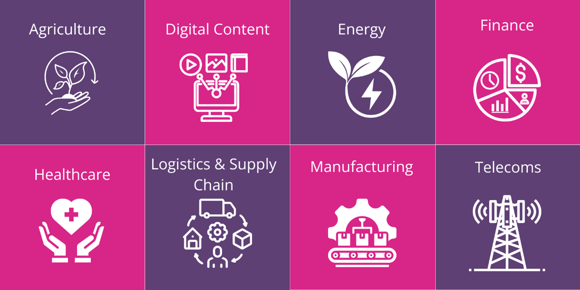
Is There Even a Bubble to Burst?
Since the dot-com bubble burst in the late 1990s, technology in general has become increasingly pervasive, with large technology vendors such as Microsoft, AWS and IBM developing AI alongside other core areas of their portfolio. Whilst there are similarities between the AI bubble of today and the dot-com bubble of the 1990s, such as rapid increases in company valuations and notable innovative technologies, there is a remarkable difference that set it apart: the dot-com bubble was far more speculative, with investment often coming with inflated expectations for immediate growth.
As a technology, AI has been in development for several years, but has only found commercially viable use cases in the last few years. Over the previous 24 months, these have risen from automation through robotic process automation (RPA), content creation through generative AI, and substantial degrees of self-management through agentic AI.
Juniper Research believes that technology is so well-established that many governmental and supranational bodies are rushing to implement regulations around the use of AI; given the rapid uptake of the technology amongst various industries and the potential impact that it can have after years of digital transformation. This is a technology whose rate of innovation is outpacing the rate at which legislation can be implemented and, to an extent, outpacing the understanding of its limits.
This position is similar to the development of facial recognition technology and blockchain technology during their initial steps to mass market adoption, with these technologies still being widely used today - albeit with slightly more regulation on their use. So, the question is not when or if the AI bubble will burst, but if there is a ‘bubble’ to burst at this point. The answer is that AI technology, wide as its use cases and implementation are, is already a technology so well-entrenched in various industries that users of digital products and enterprises should be expecting decreases in the cost of AI.
The shock to the market is not the decrease in the cost of AI claimed by DeepSeek, but the reduction scale in such a short time. This ‘shock’ will be temporary, and we expect Nvidia’s share price to eventually recover, but the long-lasting impact on the market is the potential for cheaper AI-based solutions in the future. With this decrease in cost, we can expect the market to become segmented as AI further specialises and different degrees of quality from AI solutions emerge.
As VP of Telecoms Market Research at Juniper Research, Sam produces high-quality research on telecommunications technologies and the future of digital content. His recent reports include Future Leaders 100: Telecoms 2025, Direct-to-Cell, and Operator Revenue Strategies Sam has been interviewed by leading media outlets, including the BBC and Wall Street Journal, and is a regular contributor to messaging conferences and telecommunications industry events.
Related Research
-
 ReportFebruary 2024Telecoms & Connectivity
 Molly GatfordGenerative AI in Mobile Messaging Market, 2024-2028
Our Generative AI in Mobile Messaging research suite provides in-depth evaluation of how brands and enterprises will use generative AI as a tool to improve mobile messaging communication content through increased personalisation and efficiency.
VIEW -
 ReportApril 2025Telecoms & Connectivity
 Alex WebbAI in Cellular Networks Market, 2025-2029
Our AI in Cellular Networks research suite provides operators and AI in network vendors with analysis and actionable insights. It also includes data which enables stakeholders in the market, such as mobile network operators (MNOs) and network AI vendors, to make informed decisions on business strategy for their involvement with AI in networks.
VIEW
Latest research, whitepapers & press releases
-
 ReportOctober 2026Fintech & Payments
 Jawad JahanCrypto-gaming Market: 2026-2035
Our Crypto-gaming Market research suite provides an insightful analysis of this rapidly growing market; enabling stakeholders - from crypto-gaming and sportsbooks operators, prediction market platforms, business-to-business (B2B) gambling platforms and software providers, to crypto payment processors and regulators - to understand future growth, key trends, and the competitive environment.
VIEW -
 ReportOctober 2026Telecoms & Connectivity
 Alex WebbRetail Roaming Market: 2026-2031
Our Retail Roaming research suite for mobile network operators (MNOs) and mobile virtual network operators (MVNOs) provides detailed analysis and strategic recommendations for the next era of retail roaming.
VIEW -
 ReportSeptember 2026Fintech & Payments
 Dr Manju ChhillarEmbedded Finance Market: 2026-2031
Embedded finance is one of the fastest-growing markets in financial services, and is about to accelerate even further. Our Embedded Finance Market research provides detailed analysis of the key drivers behind this growth, and what these mean for stakeholders in this market.
VIEW -
 ReportSeptember 2026Identity & Security
 Thomas WilsonApplication Security Market: 2026-2031
Our Application Security research suite provides detailed analysis of this emerging market; allowing application security providers to gain an understanding of key security trends and challenges, potential growth opportunities, and the competitive environment.
VIEW -
 ReportSeptember 2026Fintech & Payments
 Shane O'SullivanBanking Fraud Prevention Market: 2026-2031
Our Banking Fraud Prevention research suite provides a comprehensive and in-depth analysis of the types of fraud currently impacting the banking sector, and the evolving methods that can be used to overcome them.
VIEW -
 ReportSeptember 2026Telecoms & Connectivity
 Nick MaynardPrivate LTE & 5G Networks Market: 2026-2031
Our Private LTE & 5G Networks research suite provides detailed and insightful analysis of this evolving market; enabling stakeholders - from private LTE & 5G network platform specialists, mobile network operators, and diversified technology companies - to understand future growth, key trends, and the competitive environment.
VIEW


-
 WhitepaperOctober 2026Fintech & Payments
Jawad Jahan
WhitepaperOctober 2026Fintech & Payments
Jawad JahanCompliance or Anonymity - The Crypto-gaming Operator’s Dilemma
Our complimentary whitepaper, Compliance or Anonymity - The Crypto-gaming Operator’s Dilemma, analyses the current regulatory landscape of the crypto-gaming market.
VIEW -
 WhitepaperOctober 2026Telecoms & Connectivity
Alex Webb
WhitepaperOctober 2026Telecoms & Connectivity
Alex WebbReimagining the Future of Retail Roaming – How Mobile Network Operators Must Adapt
Our complimentary whitepaper, Reimagining the Future of Retail Roaming – How Mobile Network Operators Must Adapt, explores the emerging opportunities for MNOs within retail roaming.
VIEW -
 WhitepaperSeptember 2026Fintech & Payments
Dr Manju Chhillar
WhitepaperSeptember 2026Fintech & Payments
Dr Manju ChhillarEmerging Markets: The Next Opportunity for Embedded Finance
This free whitepaper examines how a combination of multiple factors is driving North America towards saturation for embedded finance.
VIEW -
 WhitepaperSeptember 2026Emerging Technology
Thomas Wilson
WhitepaperSeptember 2026Emerging Technology
Thomas WilsonVibe Coding: The Fastest-growing Threat to Application Security Today
Our complimentary whitepaper, Vibe Coding: The Fastest-growing Threat to Application Security Today, examines the state of the application security market; considering its impact on different verticals, and how it is being employed in these verticals to best combat malicious attackers and keep sensitive data safe.
VIEW -
 WhitepaperSeptember 2026Fintech & Payments
Shane O'Sullivan
WhitepaperSeptember 2026Fintech & Payments
Shane O'SullivanThe Fraud Frontier: Securing Banking in an AI-driven Era
Our complimentary whitepaper, The Fraud Frontier: Securing Banking in an AI-driven Era, examines the rapidly evolving state of the banking fraud prevention market.
VIEW -
 WhitepaperSeptember 2026Telecoms & Connectivity
Nick Maynard
WhitepaperSeptember 2026Telecoms & Connectivity
Nick MaynardHow Private Cellular Networks Are Unlocking Industry 4.0
Our complimentary whitepaper, How Private Cellular Networks Are Unlocking Industry 4.0, examines how private LTE & 5G networks are reshaping the way industry works.
VIEW


-
Fintech & Payments
Crypto Gaming: Wagers to Reach $1.3 Trillion by 2035, as Crypto Rails Widen Global Access Despite Regulatory Challenges
October 2026 -
Fintech & Payments
Juniper Research Unveils Identity & Security Award Winners for 2026
October 2026 -
Retail Roaming Revenue to Fall $4 Billion By 2031, as Regulatory Restrictions and Competition Bite
October 2026 -
Fintech & Payments
Soft POS to Surpass 100 Million Installations in 2030
September 2026 -
Fintech & Payments
The NextGen Payments & RegTech Forum Arrives in Dubai
September 2026 -
Fintech & Payments
The Global Trade Finance Expo Arrives in Dubai, UAE
September 2026